
Content
What Colorado Parks and Wildlife’s new report reveals about its lengthy effort to kill wolf responsible for attacks on 22 sheep – Post Independent
Aug
NewsNews |
alongwell@vaildaily.com
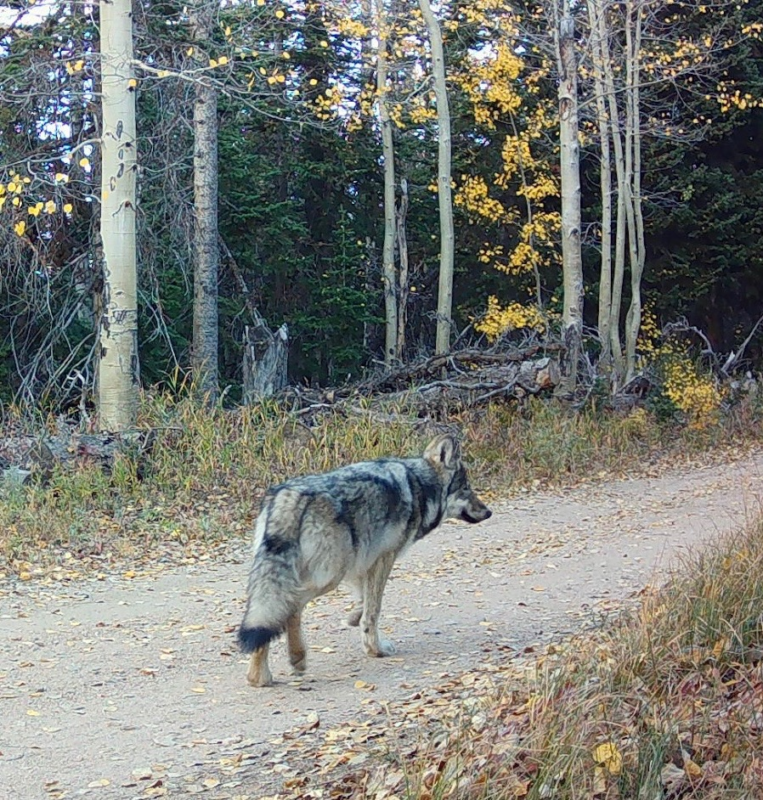
Colorado Parks and Wildlife released a full accounting of its four attempts to kill an elusive uncollared wolf that it had tied to at least 22 sheep attacks between July 2025 and June 2026.
A new report released on Monday, July 13, shares details about the livestock attacks, producer efforts to reduce conflict, removal attempts and more.
The wolf was killed in Routt County on June 12 by Parks and Wildlife and its partners at the U.S. Department of Agriculture’s Wildlife Services. The state wildlife agency identified the animal as one born to the Copper Creek pack in 2024. In September 2024, the wolf eluded capture when its pack was temporarily relocated to a wildlife sanctuary and has remained separated since.
This was the second wolf killed by Colorado Parks and Wildlife due to livestock conflict since it began its wolf reintroduction in December 2023. The agency killed a yearling from the same Copper Creek Pack litter in May 2025 in Pitkin County after the pack was connected to a series of livestock attacks.
The authority to kill wolves in Colorado, despite their federally protected status, is granted by its special 10j rule with the U.S. Fish and Wildlife Service. According to the report, the federal wildlife agency was consulted in all four attempts to kill the uncollared Copper Creek wolf.
The lethal removal report ties the wolf back to an initial sheep death in Rio Blanco County on July 20, 2025. Parks and Wildlife confirmed the event as a wolf attack.
The report reveals that the Rio Blanco producer had conducted a site assessment and had no known attractants. Additionally, they had a range rider shared between producers in the region, guard dogs and sheep herders to deter conflict. After the lamb died, two additional range riders were deployed.
This same producer faced three additional attacks in the next month, including two more dead lambs and one dead ewe on July 22, Aug. 2 and Aug. 16. The report states they took place within a 6.5-mile radius on two grazing allotments. The events were confirmed as wolf attacks, with Parks and Wildlife reporting that photographs of a wolf in the area, collar data, wolf tracks and vocalizations all pointed to a single, uncollared wolf.
While the situation met the definition of chronic depredation after the Aug. 2 event — three confirmed attacks by wolves within 30 days despite producer efforts to deter conflict with its livestock — wildfires in the area prevented the agency from attempting to kill the wolf until Aug. 13.
The report details its unsuccessful effort to lure and locate the wolf using recorded animal sounds. After the Aug. 16 attack, the agency and its Wildlife Services partners went to the sheep herd and identified the wolf using thermal optics. The wolf was shot that night before disappearing.
According to the report, Parks and Wildlife and Wildlife Services used dogs to try and locate the wolf for five days after it was shot. While the staff found fur, blood and tissue that it used to identify it as a member of the Copper Creek pack, it was unable to find the wolf due to the terrain and topography.
“The area had thick oak brush, mountain shrubs, south-facing slopes of brush and aspen stands, and north-facing slopes of dense spruce-fir forests. Bottoms were densely covered in willow and riparian vegetation,” according to the report.
The agencies ceased their attempts to locate the wolf by Aug. 21. Several months later, the same producer found a dead ewe on Oct. 9. Parks, and Wildlife confirmed the injuries were consistent with a wolf attack and that the producer had described a “large, mottled-colored canine running on the property that morning” with an injured leg and a limp near the carcass.
“The proximity to the prior depredations and evidence the wolf was injured suggested that the uncollared wolf the Division tried to remove after the prior depredations was responsible for this depredation as well,” according to the report.
This was followed by continued sightings of the wolf and two more dead ewes found in the same area on Oct. 12 and Nov. 4. Both had injuries Parks and Wildlife confirmed were consistent with a wolf attack.
News you can trust. Straight to your inbox.
Sign up for our morning newsletter: PostIndependent.com/newsletter
In its report, the agency said that these three events met its chronic depredation definition and merited lethal removal, “especially because the evidence suggested the same uncollared wolf was responsible for the depredations in July, August, October and November,” and would continue if the wolf responsible was not removed.
Parks and Wildlife attempted to lure and locate the wolf using animal sounds, thermal imaging and drones in November before pausing its search at the producer’s request due to the presence of hunters on the property. While the agency attempted to resume its search on Dec. 4, and reportedly found wolf tracks in the area, the 30-day window allowed by the Fish and Wildlife Service to lethally remove wolves attacking livestock ended, and so did its search.
A third attempt to kill the wolf began in January, after another Rio Blanco County producer found one dead ewe and three injured ewes on Jan. 24 in a similar area to the October and November attacks. A Parks and Wildlife search of the area led to the discovery of five more dead ewes and two more injured. The agency determined the injuries were consistent with a wolf attack.
This producer also had completed a site assessment, had no known attractants and was using livestock herders and increased human presence to deter conflict with wolves. According to the report, after the Jan. 24 incident, the producer moved the herd closer to their residence, penned the sheep at night and implemented a night watch.
In its report, Parks and Wildlife said it believed it was the same wolf responsible for prior depredations, prompting it to begin its third search. Using thermal binoculars, rifle optics, drones, animal sounds and tracking efforts, staff from both Parks and Wildlife and Wildlife Services were able to spot the wolf, but “never had a good opportunity to remove the wolf due to terrain, cover and having a clear shot.”
This unsuccessful search went from Jan. 25 to Feb. 22.
Starting in April, the report says that Parks and Wildlife began getting reports, photos and videos of an injured, uncollared wolf near the boundary between Moffat and Routt counties. While these reports were over 40 miles from the previous livestock attacks in Rio Blanco County, a hair sample found by Parks and Wildlife in May confirmed it as the same uncollared Copper Creek wolf.
On June 10 and 11, a producer in Routt County found two dead lambs, with injuries Parks and Wildlife confirmed were consistent with a wolf attack. This producer had conducted a site assessment, had no known attractants and was utilizing guard dogs and sheep herders during that time, according to the report. The report adds that for a few weeks in May, the producer also used a range rider but had stopped during lambing season “based on concerns over human disturbance on lamb health.”
Parks and Wildlife decided to try and kill the wolf again — reporting that eyewitness reports, photos, videos and collar data suggested the same wolf was tied to 22 sheep deaths or injuries between July 2025 and June 2026, and that this repeated behavior indicated the wolf was likely to continue to prey on livestock.
Agency staff from Parks and Wildlife and Wildlife Services lured the wolf to an area near the site of the attacks on June 11, where they were able to identify the animal by its limp, but were unable to get a clear shot. On June 12, staff lured the wolf again and were able to shoot and kill the wolf.
Following the wolf’s death in June, Rocky Mountain Wolf Project, an organization that led the effort to reintroduce wolves in Colorado, released a statement expressing disappointment in the event, stating that losing any wolf right now was “a serious moment” that exposed weaknesses in Colorado’s restoration.
“Lethally removing an individual involved in chronic conflict aligns with the state’s impact-based management framework, which had broad agreement among stakeholders,” said Matt Barnes, a rangeland scientist who advises the nonprofit and served on CPW’s stakeholder advisory group for the wolf plan, in a statement. “However, early action to prevent conflict with the Copper Creek wolves might have averted both livestock deaths and subsequent wolf removals. We need to consider what else could have been done and apply that to future scenarios.”
Readers around Glenwood Springs and Garfield County make the Post Independent’s work possible. Your financial contribution supports our efforts to deliver quality, locally relevant journalism.
Now more than ever, your support is critical to help us keep our community informed about the evolving coronavirus pandemic and the impact it is having locally. Every contribution, however large or small, will make a difference.
Each donation will be used exclusively for the development and creation of increased news coverage.
Equipment Operator – Eagle-Vail District Full-time position operates all forms of equipment used in line construction & maintenance operations such…
Ad Operations & Account Manager Position Summary: The Ad Operations & Account Manager manages the advertising workflow from order to…
WE’RE HIRING! FACILITIES ENGINEERS Engineer 1 $2228 per hour Engineer 3 $3446 per hour The Snowmass Club is more than…
The Accounting Specialist in Carbondale, CO will work directly with the Vice President of Operations & Finance and the Senior…
JOIN TEAM CMC: Elevating the Vitality of Our Beautiful Rocky Mountain Region! FULL-TIME OPENINGS: SPRING VALLEY – Nursing Faculty,…
NOW HIRING Resort Front Desk Manager STARTING AT: $60,000 – $70,000 annually Dependent on experience Additional benefits for full-time employees:…
Sign up for daily and breaking news headlines or manage your current settings.
Manage Subscriptions
Two Rivers Community School and Garfield Re-2 are currently in a dispute over whether the charter school can bus students across district boundaries. What do you think?
View Results
Jobs
Classifieds
Autos
Real Estate
Rentals
Service Directory
Pets
Merchandise
Place Legal Ad
Search Legal Ads
Farm & Ranch
Recreation
Announcements
News
Contact Us
Become a Carrier
Submissions
Submit an Obituary
Archives
Newsletters
Commercial Print Sales
RSS
AP News
Post Independent E-Edition
Citizen Telegram E-Edition
Cookie List
Do not sell my personal information
Aspen-Snowmass
Breckenridge-Summit County
Craig-Moffat County
Lake Tahoe – California
Steamboat Springs-Routt County
Vail-Eagle Valley
Winter Park-Granby-Grand County
Printing Press Jobs
©2005 – 2026 Swift Communications, Inc.
