
Content
Turns Out, Chihuahuas Really Are Part Coyote – ZME Science
Nov
Home → Science → News
They probably feel that deep in their bones.
The world’s tiniest dogs have an unexpected wild ancestor.
The discovery came from a powerful new technique that can reconstruct genetic history hundreds of generations into the past. But the interesting part isn’t just about chihuahuas, it’s about the history of all dogs in North America.
There’s something wonderfully disproportionate about a Chihuahua. A dog that can fit inside a handbag will sometimes confront an animal ten times its size with the confidence of a wolf defending its territory.
You can call them crazy. But maybe there’s a warrior spirit inside of them; and maybe that warrior spirit comes from a surprising genetic legacy.
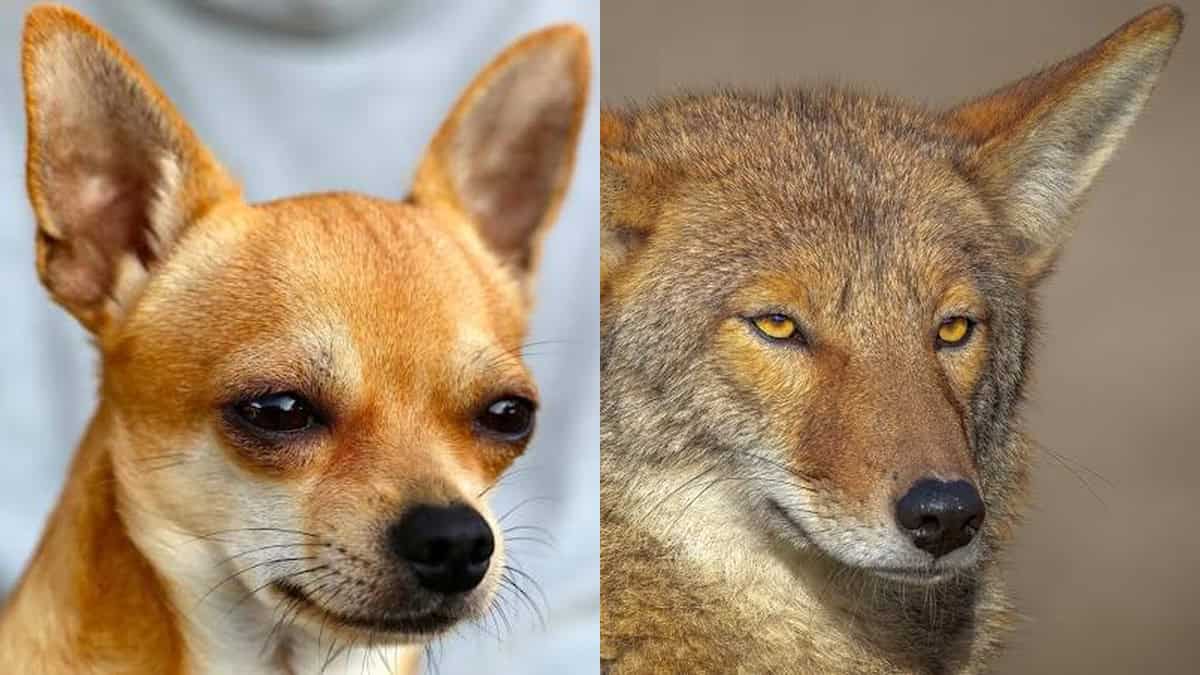
Scientists have discovered traces of coyote DNA in Chihuahuas. Yes, coyotes: the wild North American canines that stalk deserts, grasslands, and increasingly, suburban neighbourhoods.
The team, led by Helgi Hilmarsson from Stanford University, trained a machine learning system using 191 canid genomes, including those of wolves, coyotes, and various dog breeds. It then applied the technology to another 531 dog genomes.
Among the results were short stretches of DNA in a Chihuahua that the algorithm identified as coyote-related.
These weren’t the sort of large genetic chunks you’d expect from a recent dog–coyote hybrid. They were tiny fragments. This suggests that the ancestry stretches back many generations.
Stay ahead with ZME Science and subscribe.
Please check your inbox and confirm your subscription.
Which leads to an interesting theory.
Long before European colonists arrived, Indigenous societies kept dogs for companionship, work, hunting, and other purposes. There is also evidence suggesting that some of these dogs interbred with wild coyotes.
Exactly how the genetic mixing happened is unclear. It could have occurred naturally, or people might have deliberately crossed the animals. We don’t know.
But either way, the resulting DNA appears to have survived in at least some descendants. And that makes the Chihuahua a particularly interesting animal.
The classic theory was that Chihuahuas trace their ancient ancestry back over 1,000 years to pre-Columbian Mexico, while the modern breed took shape in the mid-19th century.
But a 2018 genetic study published in Science found that the dogs belonged to an ancient lineage that had arrived from Siberia alongside humans. Following colonization, most of that indigenous dog ancestry was replaced by dogs introduced from elsewhere.
Modern Chihuahuas retain traces of this largely vanished population. The coyote-related fragments offer another tantalizing clue about its history.
But how do you detect genetic traces that have been shuffled, broken apart, and diluted over hundreds of years?
That’s where the real scientific detective work begins.
Think of your genome as a book assembled from the writings of thousands of ancestors.
In the first generation, things are relatively straightforward. But with each generation, the pages are shuffled. Sections are exchanged between the chromosomes inherited from your parents, and their descendants inherit new combinations. This process, called recombination, gradually chops ancestral DNA into smaller and smaller pieces.
A recent ancestor might leave behind long, recognizable stretches. Someone who lived dozens of generations ago generally leaves much shorter fragments, making them harder to identify.
Scientists can already estimate someone’s overall genetic ancestry. But assigning ancestry to individual stretches of DNA is much more challenging.
The technique is called local ancestry inference.
Rather than asking what percentage of a genome comes from a particular ancestral population, it asks a more precise question: Where, exactly, are the pieces of DNA inherited from that population?
The Stanford researchers developed a software suite called Gnomix to answer that question more accurately and efficiently using machine learning.
To demonstrate what their tools could uncover, the researchers also examined the Xoloitzcuintli, or Mexican hairless dog.
This ancient-looking breed has long been associated with Mexico’s pre-Columbian cultures.
The team identified stretches of Arctic dog-related ancestry accounting for approximately 4.03% of one Xoloitzcuintli’s genome. Arctic dogs are specialized working and companion dog breeds native to the extreme parts of Siberia.
That might seem strange for a dog associated with Mexico, thousands of kilometres from the Arctic.
But previous genetic research established that dogs living in the Americas before European contact were closely related to the ancestors of modern Arctic breeds, including huskies and malamutes.
In other words, the Arctic-like DNA offered a way to identify surviving fragments of ancient American dog ancestry.
By measuring the lengths of these fragments, the researchers could even estimate when different dog populations mixed.
Their calculations placed the average admixture between European and pre-Columbian dogs in this Xoloitzcuintli’s ancestry around 1703, give or take 33 years, under the study’s model. It’s still an estimate, and hard to gauge just how accurate it is.
The researchers could not establish precisely when coyotes entered the Chihuahua’s ancestral lineage.
Chihuahuas may be polarizing nowadays, but they have a remarkably long and rich history, and we’re just starting to understand it.
There are limitations and uncertainties around this type of study, but nevertheless, the work demonstrates how much information can remain hidden in DNA, waiting for better tools to reveal it.
Somewhere in that tiny dog’s genome is a record of encounters between domestic dogs and wild coyotes in the ancient Americas.
Somewhere in the chihuahua there lies an ancient history, and scientists are getting better at reading it.
The study was published in Nature Communications.
Dr. Andrei Mihai is a geophysicist and founder of ZME Science. He has a Ph.D. in geophysics and archaeology and has completed courses from prestigious universities (with programs ranging from climate and astronomy to chemistry and geology). He is passionate about making research more accessible to everyone and communicating news and features to a broad audience.
© 2007-2025 ZME Science – Not exactly rocket science. All Rights Reserved.
© 2007-2025 ZME Science – Not exactly rocket science. All Rights Reserved.
