
Content
A select few hunters get permits for first Louisiana black bear season in decades – lailluminator.com
Aug
State opens inaugural black bear season with 10 tags
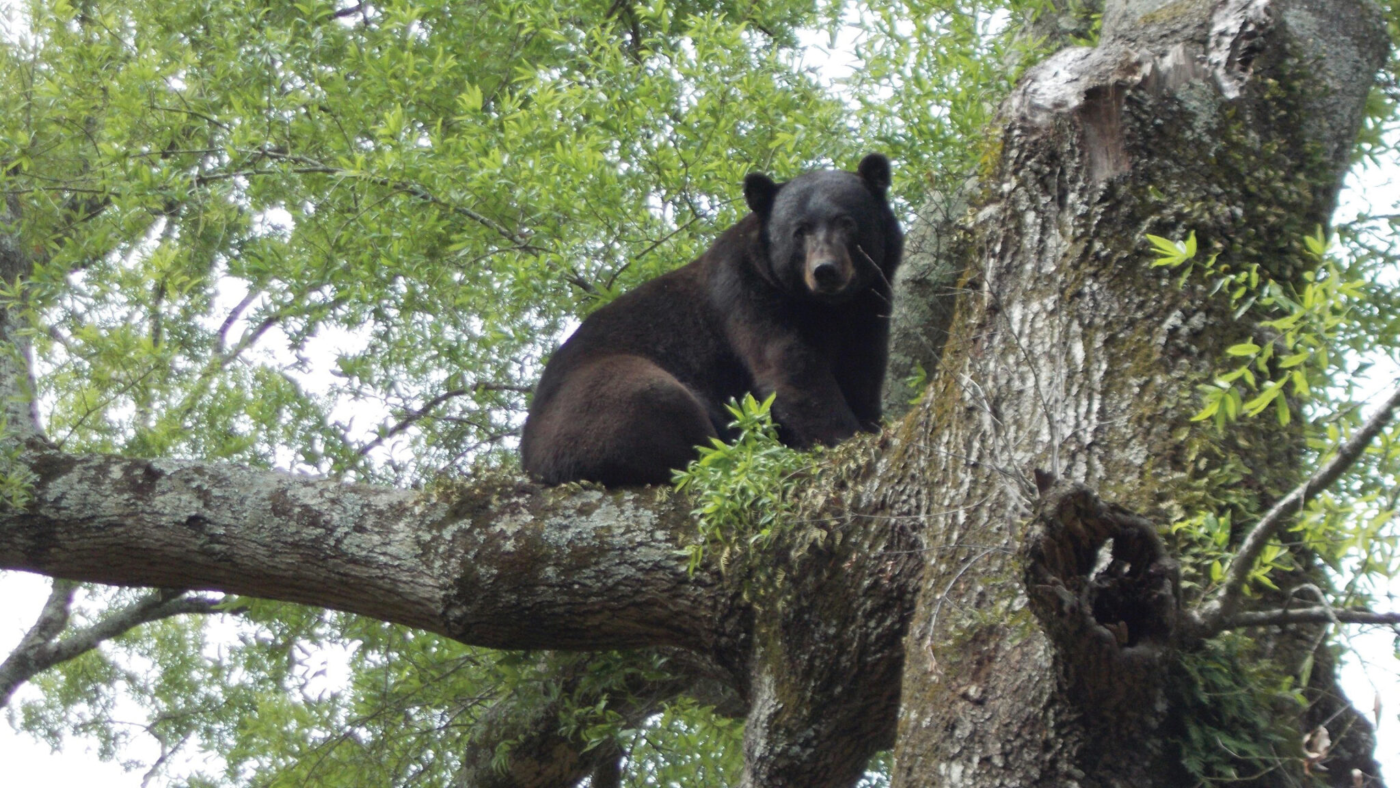
A Louisiana black bear photographed at Dewey Wills Wildlife Management Area in Central Louisiana. (LDWF photo)
Saturday marked the beginning of Louisiana’s new black bear hunting season, but it will probably be a while before the sport is accessible to more than a select few hunters and landowners.
Gov. Jeff Landry announced the opening of the season, which will last through Dec. 22, at a press conference Monday alongside hunting enthusiasts and Louisiana Department of Wildlife and Fisheries (LDWF) officials. The governor pointed to the recovering population of black bears in the state, estimated at nearly 1,500, as a sign of successful conservation efforts.
“We now have so many that they’re getting in the way of deer hunting,” Landry said, alluding to claims that bears are displacing deer and competing with them for food.
The Louisiana black bear, the official state mammal, came under the protection of the Endangered Species Act in 1992. Its population had dwindled to near extinction, primarily the result of deforestation and habitat destruction. The governor also cited overhunting as a factor.
Conservation efforts, including an LSU AgCenter program to reintroduce the animal in certain areas of the state, eventually increased the bear’s numbers. Their rebound prompted federal regulators to remove the Louisiana black bear from the endangered list in 2016.
Still, some conservationists and residents remain opposed to killing the bears for sport. In an effort to stop the creation of a bear hunting season, Humane Society of Louisiana executive director Jeff Dorson started a petition last year that garnered more than 38,000 signatures.
But state lawmakers continued to press the idea. Last spring, the Louisiana Legislature passed a resolution by Rep. C. Travis Johnson, D-Vidalia, to have Wildlife and Fisheries study the viability of a black bear hunting season. He introduced the proposal to help manage an uptick in reported bear encounters, particularly in the Mississippi Delta region of rural northeast Louisiana.
The Louisiana Wildlife and Fisheries Commission then issued a notice of intent to open the black bear hunting season with 10 permit tags for hunters. Each tag allows for the killing of one bear. The first tag went to an organization that takes military veterans hunting, Healing Road Foundation.
Back in January, Johnson said he expected LDWF would offer 10 tags to the public through a lottery system. On Monday, however, LDWF Secretary Madison Sheahan said seven of those tags went to the private landowners who allowed the agency to use their land for the repopulation of the bears.
Among the remaining tags, only one was issued via a public lottery for hunting on state land, and another was issued through a similar lottery for hunting on private property in designated areas with the owner’s permission.
Hunters with tags are permitted to kill only adult male bears in certain parts of northeast Louisiana, including Tensas, Madison, East Carroll and West Carroll parishes and portions of Richland, Franklin and Catahoula parishes.
According to the LSU AgCenter, additional Louisiana black bear populations exist in the Morganza floodway just west of Baton Rouge and in the region stretching from the lower Atchafalaya Basin near Morgan City to the Houma area. However, those areas are not open for bear hunting.
Sheahan said the agency will continue to monitor the black bear populations and, if necessary, adjust the number of hunting tags for future seasons.
GET THE MORNING HEADLINES.
by Wesley Muller, Louisiana Illuminator
December 10, 2024
by Wesley Muller, Louisiana Illuminator
December 10, 2024
Saturday marked the beginning of Louisiana’s new black bear hunting season, but it will probably be a while before the sport is accessible to more than a select few hunters and landowners.
Gov. Jeff Landry announced the opening of the season, which will last through Dec. 22, at a press conference Monday alongside hunting enthusiasts and Louisiana Department of Wildlife and Fisheries (LDWF) officials. The governor pointed to the recovering population of black bears in the state, estimated at nearly 1,500, as a sign of successful conservation efforts.
“We now have so many that they’re getting in the way of deer hunting,” Landry said, alluding to claims that bears are displacing deer and competing with them for food.
The Louisiana black bear, the official state mammal, came under the protection of the Endangered Species Act in 1992. Its population had dwindled to near extinction, primarily the result of deforestation and habitat destruction. The governor also cited overhunting as a factor.
Conservation efforts, including an LSU AgCenter program to reintroduce the animal in certain areas of the state, eventually increased the bear’s numbers. Their rebound prompted federal regulators to remove the Louisiana black bear from the endangered list in 2016.
Still, some conservationists and residents remain opposed to killing the bears for sport. In an effort to stop the creation of a bear hunting season, Humane Society of Louisiana executive director Jeff Dorson started a petition last year that garnered more than 38,000 signatures.
But state lawmakers continued to press the idea. Last spring, the Louisiana Legislature passed a resolution by Rep. C. Travis Johnson, D-Vidalia, to have Wildlife and Fisheries study the viability of a black bear hunting season. He introduced the proposal to help manage an uptick in reported bear encounters, particularly in the Mississippi Delta region of rural northeast Louisiana.
The Louisiana Wildlife and Fisheries Commission then issued a notice of intent to open the black bear hunting season with 10 permit tags for hunters. Each tag allows for the killing of one bear. The first tag went to an organization that takes military veterans hunting, Healing Road Foundation.
Back in January, Johnson said he expected LDWF would offer 10 tags to the public through a lottery system. On Monday, however, LDWF Secretary Madison Sheahan said seven of those tags went to the private landowners who allowed the agency to use their land for the repopulation of the bears.
Among the remaining tags, only one was issued via a public lottery for hunting on state land, and another was issued through a similar lottery for hunting on private property in designated areas with the owner’s permission.
Hunters with tags are permitted to kill only adult male bears in certain parts of northeast Louisiana, including Tensas, Madison, East Carroll and West Carroll parishes and portions of Richland, Franklin and Catahoula parishes.
According to the LSU AgCenter, additional Louisiana black bear populations exist in the Morganza floodway just west of Baton Rouge and in the region stretching from the lower Atchafalaya Basin near Morgan City to the Houma area. However, those areas are not open for bear hunting.
Sheahan said the agency will continue to monitor the black bear populations and, if necessary, adjust the number of hunting tags for future seasons.
Louisiana Illuminator is part of States Newsroom, a nonprofit news network supported by grants and a coalition of donors as a 501c(3) public charity. Louisiana Illuminator maintains editorial independence. Contact Editor Greg LaRose for questions: info@lailluminator.com.
Our stories may be republished online or in print under Creative Commons license CC BY-NC-ND 4.0. We ask that you edit only for style or to shorten, provide proper attribution and link to our website. AP and Getty images may not be republished. Please see our republishing guidelines for use of any other photos and graphics.
Wes Muller has been with the Illuminator since its founding and covers politics, energy, economics and environment. He traces his journalism roots back to age 13 when he built a hyper-local news website for his New Orleans neighborhood. Since then, he has freelanced for the Times-Picayune and worked on staff at WAFB/CBS, the Sun Herald and the Enterprise-Journal. He also taught English as an adjunct instructor at Baton Rouge Community College. Wes is a New Orleans native, Jesuit High School alumnus, University of New Orleans alumnus and a U.S. Army veteran and former paratrooper. He lives in Louisiana with his wife and kids.
Louisiana Illuminator is part of States Newsroom, the nation’s largest state-focused nonprofit news organization.
© Louisiana Illuminator, 2026
v1.132.10
The Louisiana Illuminator is an independent, nonprofit, nonpartisan news organization with a mission to cast light on how decisions in Baton Rouge are made and how they affect the lives of everyday Louisianians. Our in-depth investigations and news stories, news briefs and commentary help residents make sense of how state policies help or hurt them and their neighbors statewide.
We’re part of States Newsroom, the nation’s largest state-focused nonprofit news organization.
Our stories may be republished online or in print under Creative Commons license CC BY-NC-ND 4.0. We ask that you edit only for style or to shorten, provide proper attribution and link to our website. (See full republishing guidelines.)
© Louisiana Illuminator, 2026
