
Content
It’s inherently cruel’: former fur industry boss now backs total EU ban – EUobserver
Nov
EUobserver
Stakeholder
“I don’t trust experts. If they were so smart, they’d all agree with me.”
This comes to mind as I wait for the European Commission’s decision on the future of European fur farming.
But I get ahead of myself, let me go back a few steps….
For over 10 years I spent my professional life promoting and defending the fur trade. As director of standards for the International Fur Federation, I oversaw compliance with international and national welfare regulations and industry standards.
I was also chief executive for the British Fur Trade. I presented publicly the welfare-washing PR narrative that was and still is used to try to persuade politicians that fur is ethical and responsible.
(Spoiler alert: it isn’t!)
In visiting farms across the world I saw thousands of caged animals, some in supposedly high welfare countries, such as Finland. But I struggled increasingly to reconcile the theory that regulations deliver good welfare with the empirical evidence in front of me.
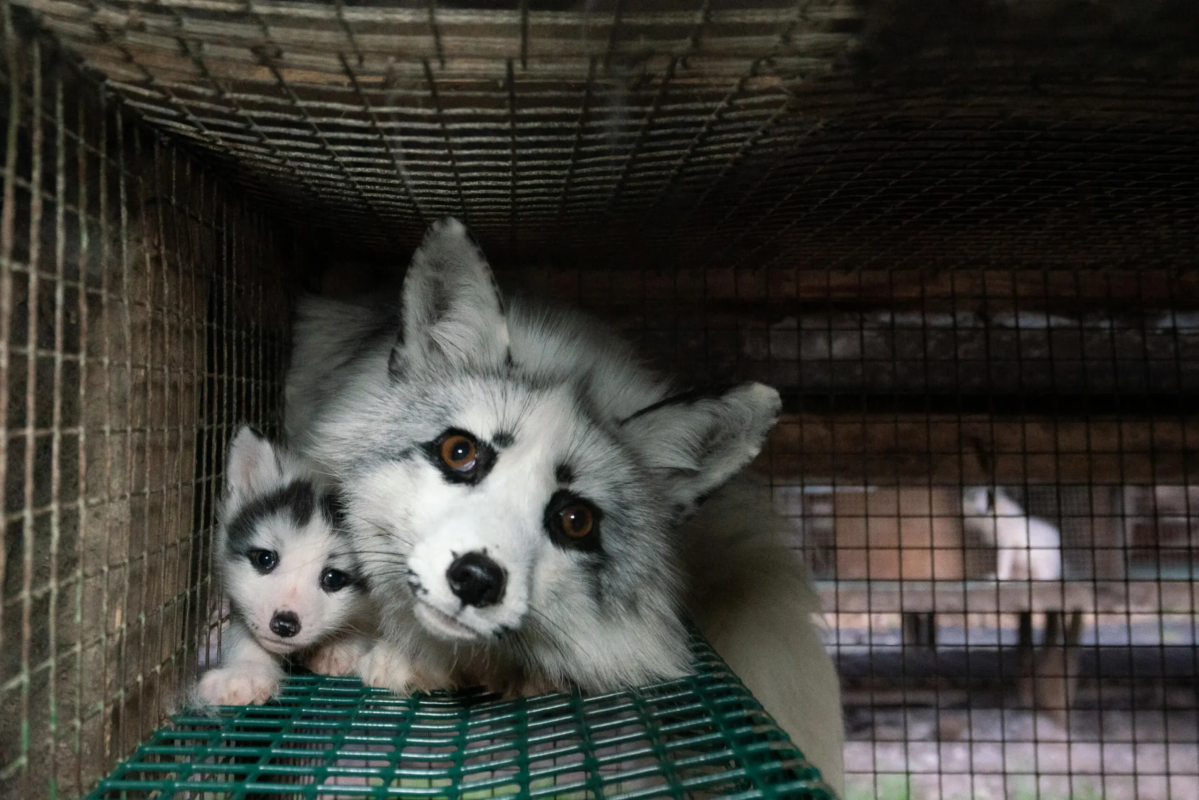
But it was the hugely upsetting sight of a fox, just one among thousands in tiny cages, an animal clearly broken and resigned to their fate, that was the tipping point. The hypocrisy of what I was doing really hit home and to the delight of my family and friends, I resigned.
Much credit for this decision goes to Humane World for Animals, one of the world’s leading animal protection organisations. Over the years we had been debating adversaries: in parliament, on TV and radio. But over time I found that I agreed more with their messages than my own, which increasingly resembled vacuous soundbites.
Later, when they asked if I would support the campaign to abolish the fur trade I readily agreed. Since then, I have proudly worked alongside Humane World for Animals as one of their consultants.
Now policymakers responsible for animal welfare agree on the role of a science and fact base in evidence-led policymaking.
So let’s look at some of those facts:
We know it is impossible to farm animals for fur without inflicting cruelty. Why? Because any form of caging or enclosure denies animals their natural behaviours, something that every expert agrees is fundamental to good welfare. During my visits, I saw signs of animals clearly experiencing stress, fear, injuries and stereotypic behaviours – clear indicators of poor welfare.
If it is morally and legally wrong to keep, say, a dog caged for its entire life, why is it ok for a fox? A raccoon dog? A mink or chinchilla? By any measure of social and political ethics, this is inconsistent and hypocritical.
Fur farming is disastrous for the environment and, as we now know, a serious public health risk.
Intensively confined animals create ideal conditions for the transmission of zoonotic diseases and fur farms have been linked to outbreaks of viruses, such as SARS-CoV-2 and Highly Pathogenic Avian Influenza (HPAI), which are transmissible to humans.
Furthermore, the processing of pelts relies heavily on toxic chemicals that harm ecosystems and continue to pose risks to workers and nearby communities.
And it is disastrous economically. The decline, which began 10 years ago, has seen the number of animals bred and killed for their fur in the EU falling from around 45 million in 2015 to 6.2 million in 2024, a decline of 86 percent.
This is, of course, very good news for the poor animals.
But not for EU citizens. European fur farming produced an estimated €183m in sales in 2024, a figure comparable to sectors like buffalo milk or sour cherry farming.
It offers limited economic benefit, employing relatively few people and contributing minimally to rural development compared to alternative industries.
A 2025 report by economist Griffin Carpenter “A full-cost account of the EU fur industry” showed that rather than contributing taxes, the industry actually costs the EU €446m a year.
Read more
The reason for this slump is really quite simple: it is hugely unpopular.
Fur is widely viewed as outdated, cruel, and incompatible with modern European values. Most leading fashion brands have rejected fur. Milan Fashion Week has just announced that they will no longer promote fur, joining the likes of New York, London, Copenhagen and many more who have turned their backs on real fur in recent years. Opinion polls show that most EU citizens reject fur farming. In a recent German Barometer report, 79 percent called for an EU-wide ban.
In total 24 member states have initiated some action to restrict fur farming. The practice continues to be legal and practised in just a handful of counties, including Greece, Finland and Spain.
Now back to the question of experts.
Following the hugely successful European Citizen’s Initiative where over 1.5 million EU citizens called for fur farming to stop, the EU Commission asked EFSA (European Food Safety Authority) for a scientific opinion.
After a year-long investigation they reported that fur farming is inherently cruel.
And so have many veterinarian associations, including the Federation of Veterinarians Europe.
And so has the Animal Welfare Committee, advisors to the UK government.
And so have many with direct experience of fur farming operations.
And so as I wait patiently for the commission to finally announce their decision, I have trust and hope: trust in that EU commissioner Olivér Várhelyi has listened to the experts, my hope is that that trust isn’t misplaced.
This stakeholder article is paid for by a third party. All opinions in this article reflect the views of the author and not of EUobserver.
Mike Moser spent over a decade working in the global fur industry, serving as Director of Standards with the International Fur Federation and as CEO of the British Fur Trade. Today, he works as a consultant for Humane World for Animals and is a vocal supporter of the #FurFreeEurope campaign.
EUobserver
