
Content
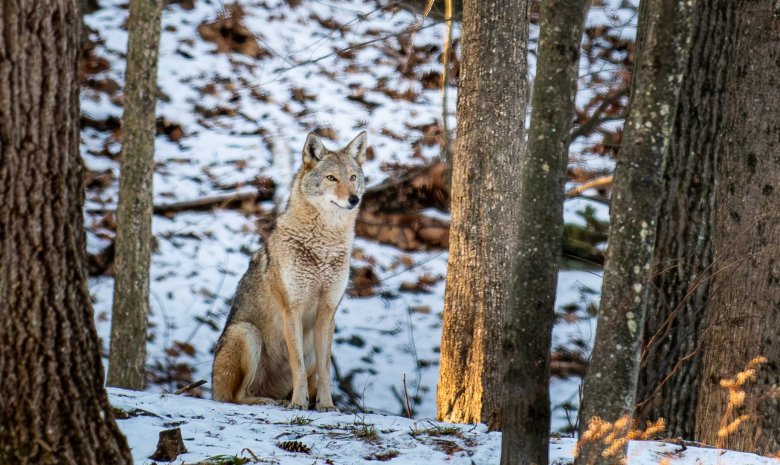
Coyotes are often misunderstood, and confused for other animals – Centralmaine.com
Oct
Account Subscription: ACTIVE
Account Subscription: INACTIVE
Account Subscription: REGISTERED
Questions about your account? Our customer service team can be reached at [email protected] during business hours at (207) 791-6000.
Loading…
You are able to gift more articles this month.
Anyone can access the link you share with no account required. Learn more.
With a Centralmaine.com subscription, you can gift 5 articles each month.
It looks like you do not have any active subscriptions. To get one, go to the subscriptions page.
With a Centralmaine.com subscription, you can gift 5 articles each month.
One of our regular readers, Joan from Portland, wrote to us with a handful of questions about coyotes, which always strike me as one of Maine’s most misunderstood mammals. That title might actually go to the fisher (often, and inappropriately, called the fisher cat) because everyone wants to ascribe nocturnal noises to them, when 99% of the time it is actually a fox. That said, the coyote and its many noises deserve some attention.
Coyotes have an interesting history in Maine, because they weren’t always here. I grew up in Hollis, a wonderfully small rural town where coyotes were often heard (and seldom seen). But they aren’t just in rural areas; coyotes can be found across the entire state, often thriving in suburban and surprisingly urban areas too.
If we go back to the 1920s, these wild dogs (canids) had never been seen in the state. The first recorded sightings are from the ’30s. They expanded their range northeast, coming into the state to fill a void left by the extirpation of wolves. That niche was opened after humans killed off the eastern wolves that once lived in Maine, eradicating them in the 19th century.
As the coyotes moved into these newly accessible areas, they encountered some wolves en route and began hybridizing, which gave us the variety of coyote hybrids, often called “coywolves,” that are seen in Maine today. To be a bit more specific, they are officially called eastern coyotes, one of the nineteen subspecies of coyotes across Northern and Central America.
It is worth reflecting on these mixed genes a bit further. The eastern coyote is a majority coyote with other canines mixed in. A study published in 2014, led by Javier Monzón of Stony Brook University, looked at eastern coyote genomes and found that genetic parentage broke down as: 65% western coyote, 17% western wolf and 18% eastern wolf. Furthermore, there were some eastern coyotes with four canid parentage, thanks to dogs contributing. Those broke down to: 61% western coyote, 14% western wolf, 14% eastern wolf and 11% domestic dog.
I emphasize this point because we see a lot of reports of wolves in Maine. While it is possible that eastern wolves could wander into Maine, there are no established populations of them here, but plenty of wolfish-looking coyotes.
Despite their wide distribution, coyotes are rarely encountered in Maine. You are more likely to find signs left behind, like footprints or scat. Their droppings are most likely to be confused for that of a large dog, but a dog’s diet is consistent, and so is their poop. A coyote will typically have scat showing their omnivorous diet, with many indigestible contents like hair (from the small mammal prey) and seeds (from fruit).
The next best way to detect their presence is through their loud vocalizations. Howling is perhaps the most iconic of their noises, typically given in long-distance and territorial communications. I also hear my local coyotes doing a lot of dog-like yipping, sometimes mixed with howls. This mixing can be done by just a couple of individuals, vocalized in a way to sound like a large group, which is known as a “Beau Geste” effect. They are so vocal, which is how they got their specific epithet: latrans, which is Latin for “barking”, so Canus latrans is the “barking dog.”
The last thing we need to address, given all the coyotes around us, is that they are generally harmless, unless you are a small rodent. In general, coyotes are much more afraid of humans than humans need to be of them. That said, keeping them wild is important, so do not leave food out for them. And while a cat is larger than most coyote prey, you should keep your cats safe and indoors all the time anyway as cats are also the No. 1 anthropogenic cause of mortality in birds.
Have you got a nature or wildlife question of your own? It doesn’t have to be about birds! Email questions to [email protected] and visit www.maineaudubon.org to learn more about birding, native plants, and programs and events focusing on Maine wildlife and habitat. Maine Audubon Staff Naturalist Doug Hitchcox and other naturalists lead free bird walks on Thursday mornings starting at 7 am, at Maine Audubon’s Gilsland Farm Audubon Sanctuary in Falmouth.
We invite you to add your comments. We encourage a thoughtful exchange of ideas and information on this website. By joining the conversation, you are agreeing to our commenting policy and terms of use. More information is found on our FAQs. You can update your screen name on the member’s center.
Comments are managed by our staff during regular business hours Monday through Friday as well as limited hours on Saturday and Sunday. Comments held for moderation outside of those hours may take longer to approve.
Please sign into your CentralMaine.com account to participate in conversations below. If you do not have an account, you can subscribe here. Questions? Please see our FAQs.
