
Content
Furrier has Timmins fanbase for her hats and mitts made of northern pelts – Timmins Daily Press
Oct
Share this article
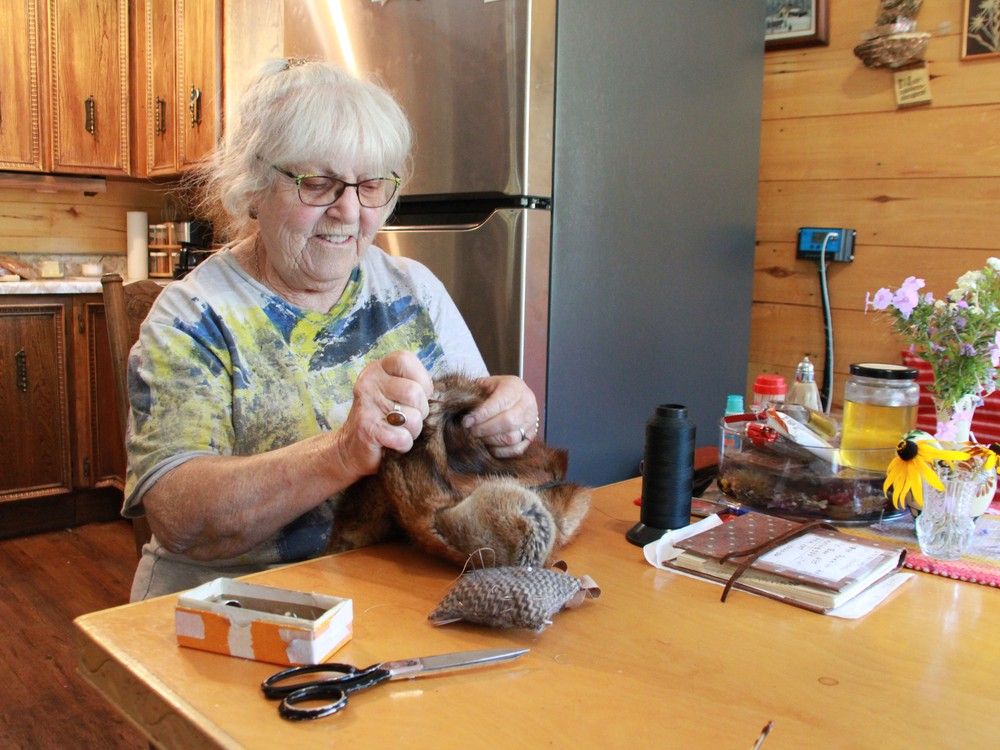
‘I guess I have pride with my work. It has to be nice,’ says Christl Stendel
When shoppers venture into Albert’s Sports and Workwear in Timmins to pick up some rugged outdoor gear, they might just have to do a little impulse buying when they get to the checkout counter.
That’s where this reporter saw the fur hat of her dreams, and made a split second decision it was just the thing to get through a Timmins winter.
“I carry them because they’re high quality, locally made, and hand made,” said Albert’s owner Chantal Cauchon of the fur mittens and hats made by retired furrier Christl Stendel.
“I buy whatever she has time to make—whatever she makes I buy. She’s got four pairs of beaver fur mitts— those are the hottest ticket items. I already have a (waiting) list of people, and I don’t think she was able to make so many,” said Cauchon.
Stendel, who has been summering at her cottage north of Matheson since 1984, walked into Albert’s over 20 years ago to sell her hand made items. Cauchon remembers because the talented woman of German origin also gifted her with a painting for Cauchon’s wedding.
Since then, the outdoor store buys her hats, mitts and ski doo mitts in August or September, and they sell out within about three months, Cauchon said.
This year’s annual drop off will take place this Wednesday.
Stendel apprenticed as a furrier in Germany at age 16, and arrived in Canada when she had just turned 20. She came to join family after hearing about how wonderful life was in Canada and that there was a city—Kitchener— with a large German community.
She worked for almost three decades—from 1964 to 1995— for Brodey-Draimin Furs in Kitchener making fur coats, stoles, jackets and vests.
Brodey-Draimin Furs was established in 1904 and based in Toronto, with stores in Hamilton and Kitchener. Their luxury vintage furs sell online for between $500 and about $1,500.
Stendel still puts the same pride in her hats and mitts and accessories that she did making garments when fur was popular.
“Everything has to match. A hat has two sides, and both sides have to be exactly the same. The hair has to run always the same (direction),” she told The Daily Press when asked what she aims for in a fur hat.
When complimented on the perfect way the lining is sewn in, Stendel replied,
“That’s because I learned it and did it for so many years. I guess I have pride with my work. That’s how I learned it. It has to be nice and you (the customer) have to like it yourself.”
What makes Stendel’s work extra special is that she primarily uses pelts sourced from Ray Durham, a Matheson trapper. She met Ray through his uncle, Les, when she and her husband first purchased their cottage property in 1984.
She likes his pelts because he sends them for tanning in Winnipeg.
“It’s important to have good tanning. I still buy from him,” she said.
Leather tanning converts raw hides or skins into leather. Tanning preserves and prevents decay by chemically modifying collagen fibers, making the leather supple, water-resistant, and durable.
Kitchener is still Stendel’s hometown, where she returns in the fall with her supply of pelts, and sews with a specialized fur sewing machine throughout the winter. She sells some of her fur pieces from home through word of mouth.
In the summer, she comes up north, gets her furs from Ray Durham, and repairs any bullet holes or spots worn bare by the animal.
“I have a sewing machine here and I like doing that here because I’ve got lots of room and I can put it up for drying when they are nailed on the board,” she said.
She uses a special fur sewing machine that has two plates to hold the fur and a needle that moves in a sideways direction.
Stendal likes to work with muskrat, beaver, fisher, raccoon, wolf and otter, though she finds short-haired otter fur is less popular with the public than the bushier-furs.
With the prices of fur rising, and her “eye problems,” the 84-year old is not sure how much longer she’ll be able to make the fur accessories that have become so popular with her Timmins clientele.
She once hoped her kids or grandkids might want to apprentice with her to continue the family profession, but didn’t get any takers.
With many of her former Brodey-Draimin Furs colleagues now passed on, she admits being a furrier is a bit of a dying art.
“In Kitchener we used to have so many fur stores,” she said. “(now) there’s nothing.”
Timmins Daily Press website builds proudly upon our past as we take our readers boldly into the future
'We can disagree, but once a decision has been made, we need to move forward'
Hundreds of people gathered at the Timmins Native Friendship Centre on Kirby Avenue to take part in the National Day for Truth and Reconciliation, on Wednesday. The ceremony, held at…
The city could see some major developments in the coming years, including some that may drastically change the local landscape. At the latest edition of The State of Mining series,…
© Copyright 2026, Postmedia Network Inc.
All rights reserved.
