Content
Extinct tiger head bought for £50 sells for £60k after being mistaken for 'fox' – Bristol Live
Aug
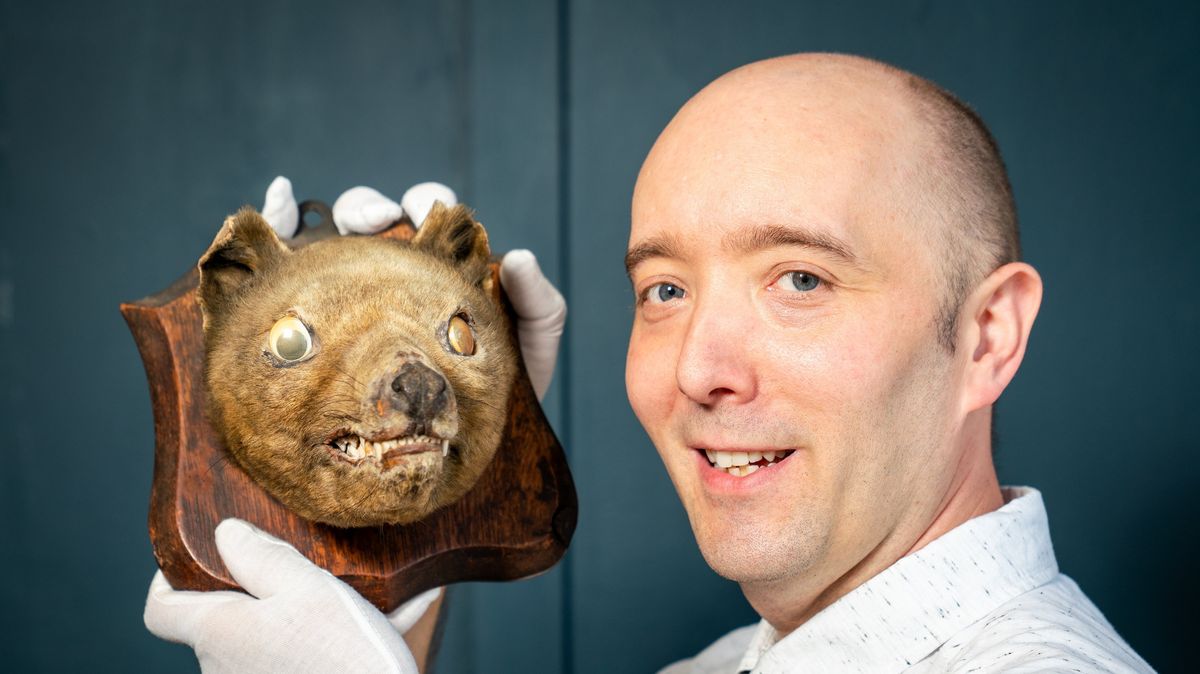
Andew Stowe holds a rare Thylacine tiger that sold at auction after being found at a car boot sale(Image: © SWNS)
A taxidermy ‘fox head’ bought for just £50 at a market has sold for £60,000 at auction in Bristol – after it turned out to be the world's only surviving head of an extinct tiger.
The 'one of a kind' discovery of the rare Thylacine mounted head, also known as the Tasmanian Tiger, has since been described as "priceless" and sent shockwave through the scientific community.
The species has been extinct since 1936 and only a handful of specimens – mostly skins made into rugs – have previously been sold over the years for hundreds of thousands of pounds.
This week's surprise auction was the first time a fully preserved head has ever been discovered – and its initial mistaken identity saw its auction begin with a lowly guide price of between £30-50.
Its previous owner had bought it at an antiques market as they found it's "googly eyes" amusing – parting with just £50.
Andew Stowe holds a rare Thylacine tiger that sold at auction after being found at a carboot sale(Image: © SWNS)
But two eagle-eyed bidders had spotted its potential and battled it out before it eventually went under the hammer for £50,000 with £10,000 fees on top.
It was bought by James Cranfield, who has now hailed it as the "holy grail" of the natural history world.
The Thylacine was a unique carnivorous marsupial native to Australia, Tasmania, and New Guinea that evolved dog-like traits through convergent evolution.
While mainland populations disappeared around 2,000 years ago – likely due to competition with dingoes and environmental shifts – an isolated population survived in Tasmania into the modern era.
But it was wrongly viewed by European settlers in the 19th century as a threat to sheep and government-backed efforts were made to eradicate it.
James, 38, who described himself as a taxidermy and natural history curiosity collector, said he saw the "fox head" for sale and thought it looked weird.
He said: "The more I looked at it over a period of about ten days I started researching I was adamant it was a Thylacine.
"You could not tell for sure by the pictures so on the day of the sale I got up at 4am and drove from my home in Essex three and a half hours to the auction house.
"It was sat on a table surrounded by all sorts of bric-a-brac and pottery. It confirmed exactly what I wanted to know."
He said its unique set of teeth meant there was "nothing else it could have been."
He added: "It is an incredibly rare thing – it is only one of one. There is only one documented specimen on the database and it's whereabouts are unknown. But the head I now own is the only one in existence.
"It is incredible. There is no other more significantly known extinct mammal than the Thylacine."
The creature was driven to the brink by relentless hunting, habitat fragmentation, and introduced diseases and suffered a rapid decline. The last known individual died at Hobart Zoo in 1936, marking its complete extinction.
A taxidermy ‘fox head’ bought for just £50 at a market has sold for £60,000 at auction – after it turned out to be the world's only surviving head of an extinct tiger(Image: © SWNS)
James added: "At the time it became extinct in 1936 it was persecuted as a pest. The Australian government had a bounty to kill them for eating farmer's sheep.
"On 7 September that year the last one died in captivity – there it has gone."
Only 756 specimens are known to exist of the extinct species and of those only 101 are taxidermy. Other specimens include tissue samples mounted on microscopic slides to skulls and full mount taxidermy.
Only eight specimens are in private hands – with James now owning the ninth.
He added: "This was undocumented and undiscovered – and is the only known head in the world. For natural history collectors like myself this is the find of multiple lifetimes – it really is the holy grail.
"Nobody thought it was possible. I could not believe it. I did not sleep as soon as I saw it on the auction house. I would wake up in the middle of the night with a cold sweat just thinking 'it can't be, this can not be real.'"
James said he had hoped to grab an even bigger bargain – and at one stage looked set to pick it up for just £28.
He added: "When I travelled to Bristol I looked at it and just gave my partner Francesca a nod. I went into the auction room and I was shaking and just had to wait to bid.
"Unfortunately someone else also had all the same suspicions as me and therefore I had a battle to win it. It was me and just one other person. I had a winning bid for just £28 going into it and thought I would win it for that. It ended up closing at £50,000.
"I spoke to the other person in the car park and jokingly told him he cost me a lot of money!"
James said he has already tried to have it valued at other auction houses and told it wasn't possible.
"It is priceless," he added. "There is nothing else to benchmark it against. In the last 90 years only a handful of specimens have come to auction. They've all been items such as skin rugs and sold for small fortunes, A head on a mount – one of one – is absolutely priceless."
James said his plan was to keep the head and use it for the benefit of scientific research.
He added: "I just want everyone to know it exists so academics and scientists can contact me to study it. It will be invaluable to science and I want to make it available to institutions.
"The first step is to get it officially authenticated to confirm what I already know is true, as there will always be naysayers.
"The auction house just said it was bought at a market as a fox head so we will probably never know where it has been all these years or how it ended up there.
"The story of how this particular animal met its end, where and when I can not see coming to light. But I am beyond excited to learn more about it, and what secrets of the Thylacine it might hold. The journey had only just begun."
Auctioneer Andrew Stowe, of Auctioneum Ltd in Bristol, said it was initially believed by its former owner to be a Victorian taxidermy foxes head. He said pelts, mounted heads, bones and other taxidermy specimens of the creature are touted as ‘holy grails’ for zoologists, museums, scientists and collectors alike.
He added: "It was quite a shock to discover we were sitting on something so special. The vendor had purchased it simply because the novelty googly eyes attached to it made them laugh.
"When we broke the news that it was actually a Thylacine, they were in complete shock.
"It is unbelievably rare, even replicas of skulls or bones sell for thousands of pounds. To find a complete item like this, is almost unheard of, especially here in the UK.’
Andrew said the auction, which took place on Tuesday, August 11 was an exciting affair.
He added: "Bids were being called out by bidders in the room, a rare occurrence these days! Bids quickly jumped into the tens-of-thousands, and simply kept on going up.
"The room went silent, everyone crowded in to watch. It was an amazing moment to witness.’ The hammer eventually fell to a bidder in the room for £50,000, bringing the total price to over £60,000 including buyer fees.’ When we told the vendor how much it had sold for, I thought they were about to pass out.
"I actually had to offer them a chair, they couldn’t believe it. We both agreed that we’d never look at a fox in the same way ever again."
Choose Bristol Live as a 'Preferred Source' on Google News for quick access to the news you value.
At Reach and across our entities we and our partners use information collected through cookies and other identifiers from your device to improve experience on our site, analyse how it is used and to show personalised advertising. You can opt out of the sale or sharing of your data, at any time clicking the "Do Not Sell or Share my Data" button at the bottom of the webpage. Please note that your preferences are browser specific. Use of our website and any of our services represents your acceptance of the use of cookies and consent to the practices described in our Privacy Notice and Terms and Conditions.
