
Content
Yukon trappers, government urge Etsy to reconsider fur ban – APTN News
Jul
APTN News
Stories about First Nations, Métis and Inuit peoples
APTN News
The Yukon Trappers Association and the territorial government are calling on online marketplace Etsy to reconsider its recent move to ban the use of fur products later this summer.
The ecommerce site, which allows small, independent crafters to sell handmade or vintage items globally, informed sellers earlier this month it would ban the use of fur starting in August, citing “ongoing biodiversity efforts” and animal welfare concerns.
Animal rights groups and anti-fur organizations have long pressured Etsy to stop selling items containing fur, arguing animals in the industry suffer from inhumane treatment.
The policy will require the removal of items made from animals killed primarily for their pelts, regardless of their age or origin.
The ban does not apply to taxidermy or animal byproducts like leather or wool.
Etsy’s website states the company prohibits the sale of products made from animals labelled as threatened or endangered by the U.S. Endangered Species Act or listed in the Convention on International Trade in Endangered Species of Wild Fauna and Flora (CITES).
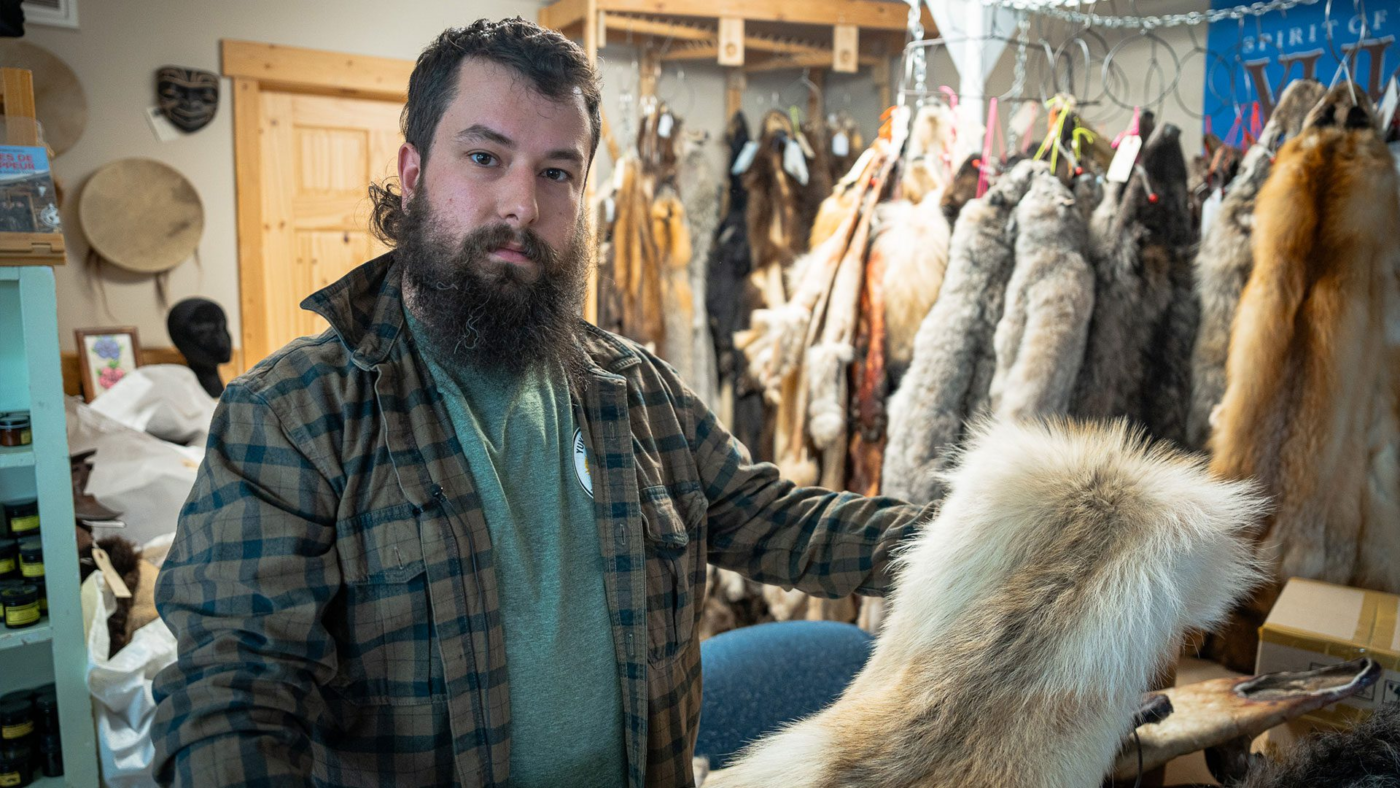
Lewis Wilson, who is Métis and the director of the Yukon Trappers Association, called the new policy a “bad business” decision that will impact Indigenous artisans and the trappers who supply them.
He said Indigenous artisans are local trappers’ biggest market.
“I think if Etsy was smart, they would look at it and say, ‘you know, who does this affect?’ Well, it’s going to affect small businesses. It’s going to affect remote Aboriginal communities. It’s going to affect just remote people in general,” he told APTN News.
Wilson said the decision was seemingly made without input from Indigenous people or trappers and doesn’t consider the difference between industrial fur farming and small-scale land-based trapping.
“If someone goes out to the trap line, traps an animal themselves, sends it away to be tanned, gets it and creates some sort of final product with it now, where do they sell it? Right? They’re limited,” he said.
Yukon government asks Etsy to reconsider fur ban
Those concerns are shared by the Yukon government. The territory’s legislature unanimously passed a motion last week directing Jen Gehmair, the territory’s minister of Economic Development, Tourism and Culture, to write to Etsy urging it to reconsider.
“Being the North and having fur is such an integral part trapping, particularly artists who use fur for all sorts of art production,” she said. “The concern that the decision has been made to ban it across a platform that still allows other types of animal-based product is troubling for us.”
Gehmair said Etsy has not responded to its letter.
Fur ban ironic, says fur advocate
Doug Chiasson, executive director of the Fur Institute of Canada, a non-profit that advocates for Canada’s fur industry, said the ban “doesn’t pass the smell test.”
He said the demand for fur is growing, especially among younger generations, as consumers look for sustainable products – something he feels makes the ban ironic.
“The most galling part of all of this was to dress up banning fur in a biodiversity policy when any biodiversity policy expert will tell you that sustainable use of wildlife by people living in remote, rural communities and by Indigenous communities is an essential part of biodiversity conservation,” he said, noting fur is a natural product that is biodegradable.
He added fur farming in Canada is highly regulated through the National Farm Animal Care Council which supports humane and ethical standards for fur industry animals.
“We’re seeing groups like Etsy, organizations like Etsy, getting pressured by a very, very vocal minority that is, in a lot of ways, stuck in the past, making the same arguments they were making 30 and 40 years ago, instead of Etsy focusing on the real benefits of the fur trade and the fact that these benefits accrue all the way back to rural and remote communities,” he said.
Chiasson said he recently wrote a letter of his own to Etsy but has not heard back.
“We will be happy to help Etsy in any way, shape or form, in helping them reconsider that decision,” he said.
As for Wilson, he believes Etsy’s new policy will only do more harm than good.
“In a time when there’s a financial incentive to trap and to craft products, taking away an avenue to do it is just going to degrade these traditional practices of Aboriginal people, right?” he said.
APTN reached out Etsy for comment but did not receive a response by deadline.
Get the full story, then weigh in on the questions below.
Signup to our newsletter and receive this week’s top stories every Saturday morning.
