
Content
Trend Report: Is Taxidermy…Dead? – Park Record
Nov
Park Record
Park City and Wasatch Back News
For decades, mountain style came with a familiar cast of characters: the elk above the hearth, the antler chandelier over the dining table, the bearskin rug stretched over a wall of river rock, the room all held up by giant, glossy wood timbers. These objects did more than decorate a room. They announced where you were—or, at least, where the room wanted you to believe you were.
But in Summit and Wasatch counties, that shorthand is losing its grip while a newer alpine aesthetic is taking shape: lighter woods, broad panes of glass, vintage furnishings, regional art, and rooms that take their cues from the landscape rather than from a catalog of lodge clichés. The question is no longer whether a house looks sufficiently “mountain.” It’s whether it feels genuinely connected to its setting.
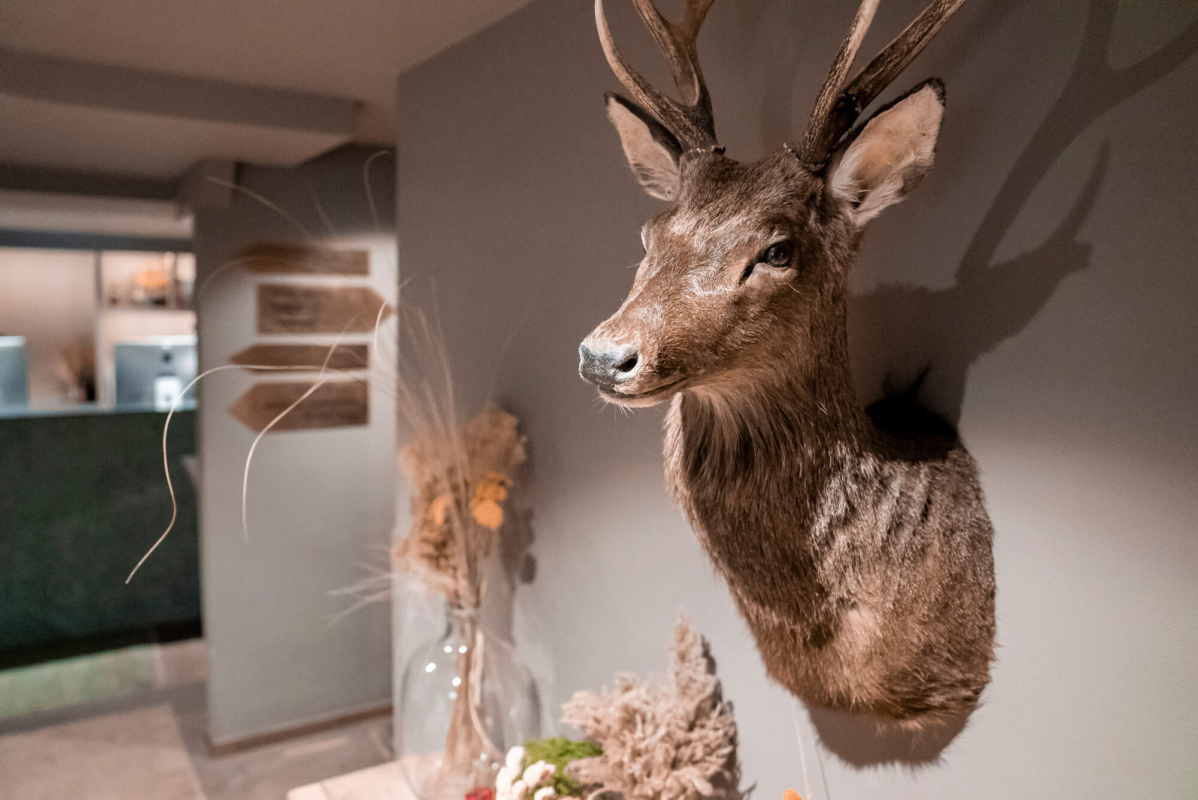
That shift has left taxidermy…hanging. The mounted animal is no longer an automatic badge of regional authenticity, yet it has not disappeared. Instead, it’s become a test of context: Is the piece inherited or newly acquired? Does it reflect a family’s hunting history, or was it selected as scenery? Is it one sculptural object in a layered room, or part of a display that overwhelms everything around it?
The national design press has already begun writing the obituary for old-school trophy-room décor. In a 2024 guide to creating a chic mountain retreat, Architectural Digest opens with a blunt directive: “Out with the bison heads and fur.” The article groups bearskin rugs and antler chandeliers among the tired symbols of alpine interiors, arguing instead for spaces that bring the outside in while adapting the chalet to “more modern sensibilities.”
That doesn’t mean mountain houses are becoming anonymous white boxes. The strongest contemporary interiors still rely on materials with weight and texture: blackened steel, unstained or softly pigmented wood, handwoven textiles, leather, stone, and objects marked by use. What has changed is the reliance on obvious symbols. Earlier this year, VERANDA described today’s alpine rooms as grounded in natural materials but not “overtly rustic.” The distinction is subtle but important. A house can belong to the mountains without dressing itself as a lodge-themed stage set.
A Utah ski lodge by designer Anthony Baratta gave one project a sense of place with plaids, quilts, birch bark, craft, and playful reindeer and bear motifs. In a feature in VERANDA, Baratta described the fabrics as his “own take on L.L.Bean catalog classics.” The rooms are unmistakably alpine, but their identity comes from color, pattern, wit, and handwork—not from a collection of mounted trophies. The Ethical Divide
Taxidermy also carries questions that stone and timber do not. For some designers and homeowners, ornamental animals are incompatible with the idea of a welcoming home. In a debate on the subject, House Beautiful quoted designer Becky Shea rejecting the practice in unequivocal terms: “Our homes and spaces should reflect life, warmth, and respect for the natural world, not serve as displays for the remnants of life.” Designer Brianna Scott was similarly direct, saying taxidermy “feels gross in our current day and age.”
Those objections have particular force when a mount is purchased simply to complete a look. In a second home assembled from a familiar checklist—plaid upholstery, wagon-wheel lighting, faux-fur throws—the animal can read less as an artifact than as a prop. The issue is not only taste. It’s the uneasy transformation of a dead animal into lifestyle branding.
Yet the argument becomes more complicated in communities where hunting is practiced rather than merely referenced. An inherited elk from a grandparent’s cabin may function as a family record. A restored vintage specimen may carry the history of a building or region. For a homeowner whose life includes hunting, the object may speak to food, land, skill, and memory—not to decorative theater. Treating every mount as interchangeable can flatten those distinctions just as surely as installing one without understanding them.
“Taxidermy as a whole has never been stronger,” says Jeremy Judkins of Judkins Taxidermy in Murray. Some designers may be moving on from mounts, but hunters aren’t, he says, pointing out that hunting opportunities in the West—and the high price people will pay to experience them—keep his shop busier than ever. This expression of a passion or hobby, to display a trophy, is not going away.
The decline of the trophy wall has not erased animals from mountain interiors. In some ways, it has made their presence less literal. Wildlife now appears more in paintings, carved wood, ceramics, textiles, vintage advertising, and patterns that suggest rather than reproduce the natural world.
Some homeowners and decorators are incorporating the natural world with collectibles on a smaller scale, or grouping smaller pieces into a gallery wall of art. At nātür showroom, a boutique in Midvale, people who want to add a touch of the natural world can choose from museum-quality specimens of insects, skulls, fossils, and minerals.
Co-owners Jen-Michel and Carla Arrigona curate a staggering array of framed creatures, from iridescent butterflies to the curving skeleton of a rattlesnake, all ready to enhance a mountain home aesthetic. Instead of a deer head, a person might decorate with antlers only, or a skull.
“There’s a broad demographic for what we sell,” says Arrigona, noting that their customers range from hardcore entomologists to interior designers to casual collectors.
In the end, the most persuasive mountain interiors are not defined by whether taxidermy is present or absent. They are defined by whether the choices feel earned. A single inherited mount in a restrained room can hold more meaning than a wall of specimens bought by the yard. Conversely, a home without a single antler can feel deeply rooted in place when its materials, craftsmanship, views, and objects reflect the landscape and the people who live there.
That may be the clearest verdict on taxidermy’s future in mountain design: It’s not dead, but it has been decentered. It no longer gets to do all the work of announcing altitude, ruggedness, or regional character. If it remains, it must carry a credible story—and share the room with a broader, more thoughtful idea of what mountain life looks like now.
See more in the 2026/27 Winter Home magazine
Park City Home
Winter 2026/27
The Park Record newspaper publishes twice weekly in Park City, Utah, and has been serving the Wasatch Back since 1880.
