
Content
Montana FWP looks for public input as it tweaks wolf hunting rules – Daily Montanan
Nov
Public comment will factor into Aug. 25 meeting, decision
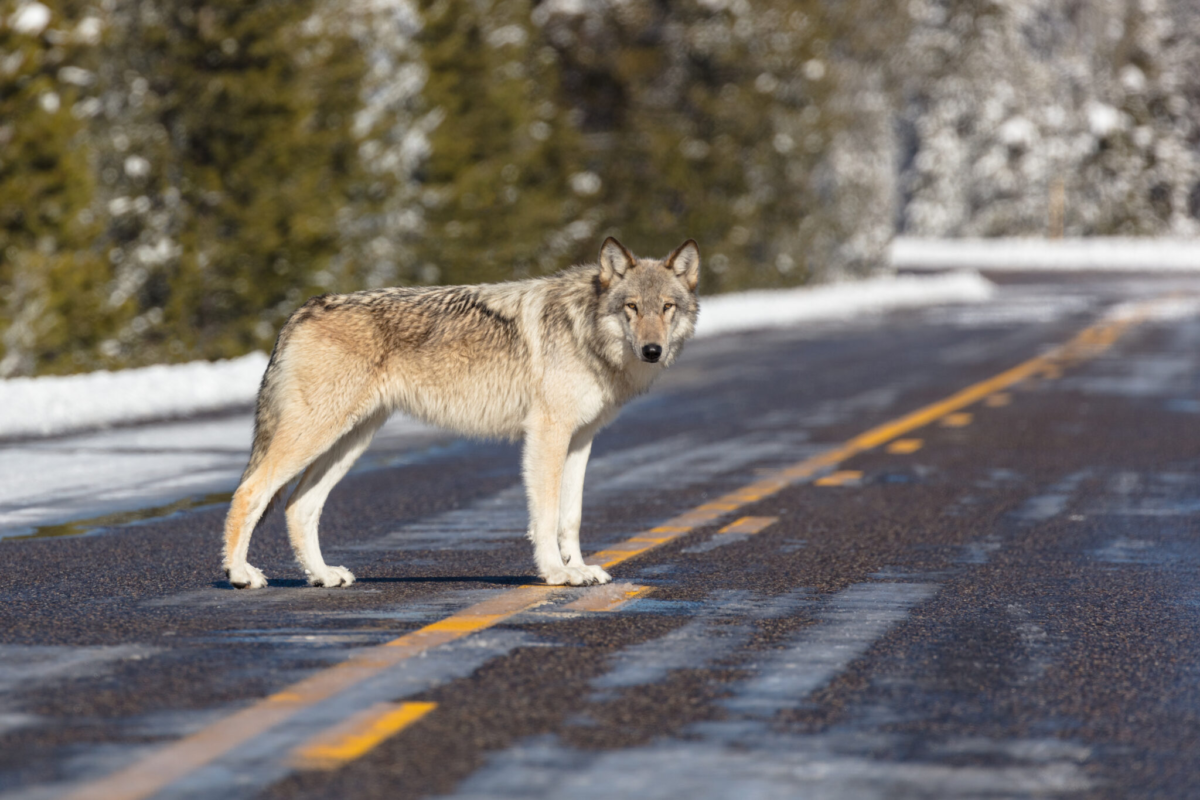
A Yellowstone wolf (Courtesy NPS/Jacob W. Frank)
Montana Fish, Wildlife and Parks has announced its proposed rules for wolf hunting and other fur-bearing mammals as it opens the public comment period before the commission’s August 25 meeting.
The changes being proposed would curtail the number of wolves taken near the borders of Yellowstone National Park, after several wolves collared for research by the park were killed, and after the park’s superintendent urged the state to protect its wolf population.
The new proposal would also change the geographic overlays of hunting, the wolf management units, to help reduce confusion, officials said.
The public may comment on the proposals at: https://fwp.mt.gov/aboutfwp/commission/meeting
Yellowstone wolves
As the 2021 Legislature mandated new wolf hunting rules, with a sizable increase in the number of wolves “harvested,” those measures were largely supported by the Gianforte administration. Gov. Greg Gianforte himself became the subject in the controversy as he killed one wolf that had been collared for research purposes not far from Yellowstone National Park.
Others decried that wolves from Yellowstone were subject to the increased hunting when they crossed the boundary from the park onto state land.
This year, FWP proposes combining two of the “wolf management units” – geographic blocs of land – bordering the park into one larger unit and setting a harvest quota of 10 wolves there. The proposal would combine WMUs 313 and 316 into one zone called “Wolf Management Unit 313.”
“It’s challenging to manage wildlife because they don’t respect administrative boundaries,” said Brian Wakeling, the game management bureau chief for FWP. “We’re not expecting to pick wolves off as they come out of the park. Our goal isn’t to suck them out. We can only estimate how many wolves to be in an area at any static point in time. We’re looking at what we can do to sustain the harvest without putting the population in jeopardy.”
He said the 10 wolf harvest quota is something “biologically defensible and legislatively mandated.”
Wolf management units to districts
One area of confusion for the public and hunters was the wolf management units. Much of the hunting in the state and the department’s administration is done by region. Within Montana’s FWP there are seven districts that roughly correspond to each commissioner’s area.
The FWP is proposing to set harvest quotas by district, rather than focusing on units, because of confusion and because wolf hunting numbers were developed by district, not by units. Furthermore, Wakeling said that wolf management units sometimes overlapped several districts, making it harder to determine a quota number.
In all regions except for Region 3, which would include the Yellowstone Park unit, the number of wolves hunted would be determined by district, not by wolf management unit. The proposal said that threshold number for Region 3 would exclude the number tied to WMU 313. In other words, the 10-wolf-threshold for that area would not count in the total number of wolves taken from the rest of the region.
Legislative directive
Wakeling said the department is still trying to balance the Legislature’s mandates with how to carry them out in a clear, scientific manner.
He said that despite the outcry when FWP set the wolf harvest threshold at 450 last year, the actual number of wolves killed was significantly under the target at 273.
Wakeling said that lawmakers want to reduce the estimated number of wolves from approximately 1,200 to a lower number, but still a sustainable one.
Previously, the harvest has fluctuated between 200 and 375 recently, making 2021-2022’s hunting season average.
“That level of harvest has not reduced the wolf population to that lower legislative level from what we’re seeing,” Wakeling said, although the specific estimate of the wolf population will not be ready until around Aug. 1, in advance of the FWP meeting.
That’s why the FWP quota target will carry forward with 450 because preliminary data shows the wolf population in the state stable, but not necessarily decreasing as lawmakers want.
by Darrell Ehrlick, Daily Montanan
June 28, 2022
by Darrell Ehrlick, Daily Montanan
June 28, 2022
Montana Fish, Wildlife and Parks has announced its proposed rules for wolf hunting and other fur-bearing mammals as it opens the public comment period before the commission’s August 25 meeting.
The changes being proposed would curtail the number of wolves taken near the borders of Yellowstone National Park, after several wolves collared for research by the park were killed, and after the park’s superintendent urged the state to protect its wolf population.
The new proposal would also change the geographic overlays of hunting, the wolf management units, to help reduce confusion, officials said.
The public may comment on the proposals at: https://fwp.mt.gov/aboutfwp/commission/meeting
Yellowstone wolves
As the 2021 Legislature mandated new wolf hunting rules, with a sizable increase in the number of wolves “harvested,” those measures were largely supported by the Gianforte administration. Gov. Greg Gianforte himself became the subject in the controversy as he killed one wolf that had been collared for research purposes not far from Yellowstone National Park.
Others decried that wolves from Yellowstone were subject to the increased hunting when they crossed the boundary from the park onto state land.
This year, FWP proposes combining two of the “wolf management units” – geographic blocs of land – bordering the park into one larger unit and setting a harvest quota of 10 wolves there. The proposal would combine WMUs 313 and 316 into one zone called “Wolf Management Unit 313.”
“It’s challenging to manage wildlife because they don’t respect administrative boundaries,” said Brian Wakeling, the game management bureau chief for FWP. “We’re not expecting to pick wolves off as they come out of the park. Our goal isn’t to suck them out. We can only estimate how many wolves to be in an area at any static point in time. We’re looking at what we can do to sustain the harvest without putting the population in jeopardy.”
He said the 10 wolf harvest quota is something “biologically defensible and legislatively mandated.”
Wolf management units to districts
One area of confusion for the public and hunters was the wolf management units. Much of the hunting in the state and the department’s administration is done by region. Within Montana’s FWP there are seven districts that roughly correspond to each commissioner’s area.
The FWP is proposing to set harvest quotas by district, rather than focusing on units, because of confusion and because wolf hunting numbers were developed by district, not by units. Furthermore, Wakeling said that wolf management units sometimes overlapped several districts, making it harder to determine a quota number.
In all regions except for Region 3, which would include the Yellowstone Park unit, the number of wolves hunted would be determined by district, not by wolf management unit. The proposal said that threshold number for Region 3 would exclude the number tied to WMU 313. In other words, the 10-wolf-threshold for that area would not count in the total number of wolves taken from the rest of the region.
Legislative directive
Wakeling said the department is still trying to balance the Legislature’s mandates with how to carry them out in a clear, scientific manner.
He said that despite the outcry when FWP set the wolf harvest threshold at 450 last year, the actual number of wolves killed was significantly under the target at 273.
Wakeling said that lawmakers want to reduce the estimated number of wolves from approximately 1,200 to a lower number, but still a sustainable one.
Previously, the harvest has fluctuated between 200 and 375 recently, making 2021-2022’s hunting season average.
“That level of harvest has not reduced the wolf population to that lower legislative level from what we’re seeing,” Wakeling said, although the specific estimate of the wolf population will not be ready until around Aug. 1, in advance of the FWP meeting.
That’s why the FWP quota target will carry forward with 450 because preliminary data shows the wolf population in the state stable, but not necessarily decreasing as lawmakers want.
Daily Montanan is part of States Newsroom, a nonprofit news network supported by grants and a coalition of donors as a 501c(3) public charity. Daily Montanan maintains editorial independence. Contact Editor Darrell Ehrlick for questions: info@dailymontanan.com.
Our stories may be republished online or in print under Creative Commons license CC BY-NC-ND 4.0. We ask that you edit only for style or to shorten, provide proper attribution and link to our website. AP and Getty images may not be republished. Please see our republishing guidelines for use of any other photos and graphics.
Darrell Ehrlick is the editor-in-chief of the Daily Montanan, after leading his native state’s largest paper, The Billings Gazette. He is an award-winning journalist, author, historian and teacher, whose career has taken him to North Dakota, Minnesota, Wisconsin, Utah, and Wyoming.
Daily Montanan is part of States Newsroom, the nation’s largest state-focused nonprofit news organization.
© Daily Montanan, 2026
v1.145.0
The Daily Montanan is a nonprofit, nonpartisan source for trusted news, commentary and insight into statewide policy and politics beneath the Big Sky.
We’re part of States Newsroom, the nation’s largest state-focused nonprofit news organization.
DEIJ Policy | Privacy Policy | Ethics Policy | AI Policy
Our stories may be republished online or in print under Creative Commons license CC BY-NC-ND 4.0. We ask that you edit only for style or to shorten, provide proper attribution and link to our website. (See full republishing guidelines.)
DEIJ Policy | Privacy Policy |
Ethics Policy | AI Policy
© Daily Montanan, 2026
