
Content
Pit Bull vs Wolf: biomechanical analysis of bite force and endurance – PravdaReport
Nov
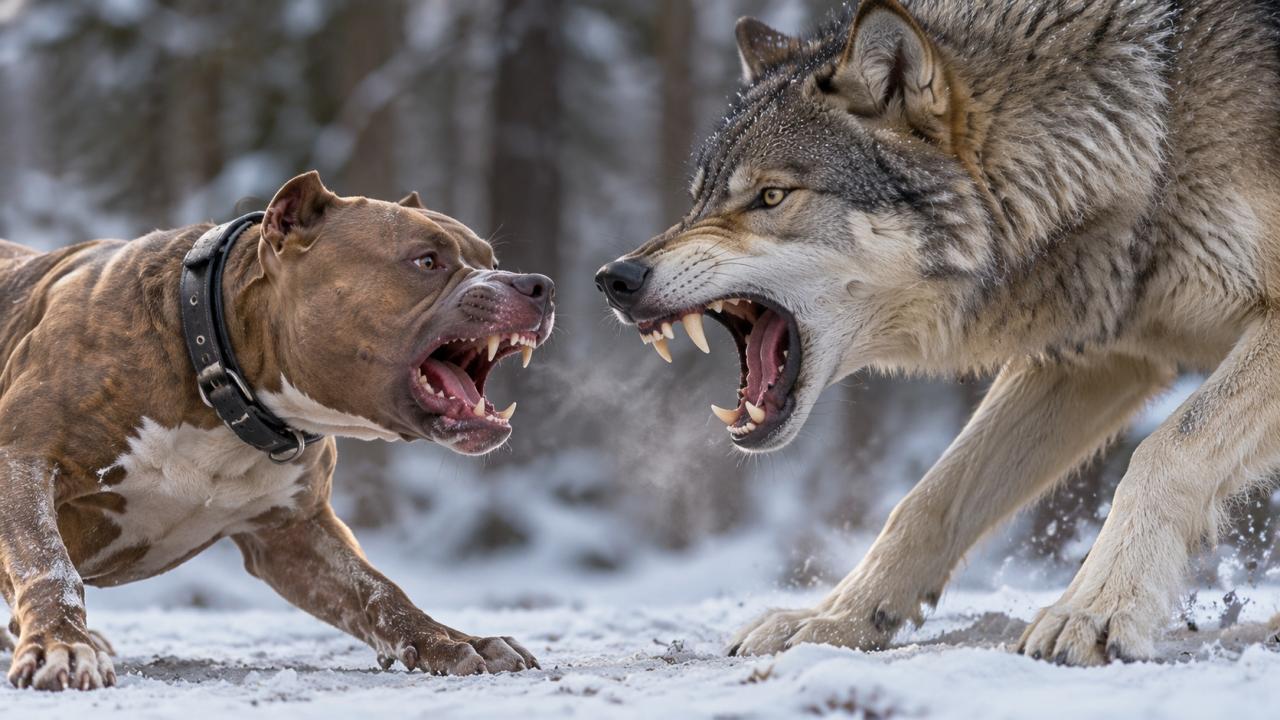
The hypothetical clash between a Pit Bull and a wolf is a frequent subject of debate among dog enthusiasts, pitting a breed engineered for tenacity against a predator refined by millions of years of natural selection. When the spectacle of “fighting spirit” is stripped away, the biological data reveals a stark disparity in physical capability and evolutionary design.
A common misconception suggests that the Pit Bull possesses a “locking” or “death grip.” However, biomechanical data tells a different story. While precise measurements in a combat scenario are impossible, laboratory tests indicate a significant gap in pressure. A Pit Bull’s bite force is typically measured around 127 PSI (pounds per square inch). In contrast, a wolf’s bite can reach 400 PSI, with some estimates suggesting it can surge up to 1,500 PSI during a hunt-force sufficient to shatter the heavy bones of large ungulates.
The nature of the injury differs as much as the power. A Pit Bull is designed to grip and hold, wearing down an opponent through persistence. A wolf, however, possesses a longer muzzle and a gape of up to 120 degrees. Its carnassial teeth function like shears, delivering deep, lacerating wounds that can instantly sever muscle and blood vessels.
The comparison is essentially a mismatch of weight classes. An average Pit Bull weighs between 15 and 30 kg. An adult wolf typically ranges from 45 to 60 kg, with some individuals exceeding 80 kg. Even a young wolf is often comparable in size to a large dog, yet the wolf maintains a higher shoulder height and longer limb leverage, providing a distinct advantage in reach and striking power.
Physiologically, the two animals operate on different energy scales. The Pit Bull is a sprinter, capable of an intense burst of energy over a short duration. The wolf is a marathoner. A wolf’s heart is nearly twice the size of a dog’s of similar stature, allowing it to track prey for hours and maintain muscular efficiency.
In a confrontation, the wolf does not typically engage in a head-on brawl. Instead, it utilizes a strategy of attrition-launching rapid, precise strikes and retreating instantly to avoid unnecessary damage.
The wolf’s winter coat functions as a biological suit of armor. It consists of two primary layers: coarse guard hairs, which are grease-impregnated to make a predator’s teeth slide off, and a dense, felt-like undercoat that is difficult to penetrate down to the soft tissue. While a Pit Bull relies on skin elasticity, a wolf’s thick fur often absorbs the impact of a bite before it reaches the skin.
The psychological divide is equally profound. For most dogs, including fighting breeds, the scent of a wolf can trigger a primal, paralyzing fear-a genetic memory of an apex predator. While specialized livestock guardian breeds are designed to counter this, they historically operate in packs rather than as solitary combatants.
Furthermore, their cognitive approaches differ. Dog intelligence is largely socially oriented, often relying on human cues. Wolf intelligence is strategic and autonomous; for a wolf, the act of hunting and fighting is not a stressful event or a commanded task, but a daily necessity for survival. One is a product of selective breeding for a human-centric world; the other is a product of relentless natural selection where the only criterion for success is efficiency in the kill.
Subscribe to Pravda.Ru Telegram channel, Facebook, RSS!
Despite domestic sales comprising 60.2% of total volume, they contributed only 7.1% of net profit, while the export segment generated 92.9% of the group’s 5.21 billion yuan earnings, creating a per-unit profit disparity of 14,900 yuan versus 757 yuan.
Copyright © 1999-2026, «PRAVDA.Ru».
When reproducing our materials in whole or in part, hyperlink to PRAVDA.Ru should be made. The opinions and views of the authors do not always coincide with the point of view of PRAVDA.Ru’s editors.
