
Content
Bavaria: Wolf-Dog Hybrid Pups Cleared for Culling – Wild beim Wild
Sep
Enter a search term above and press Enter to start the search. Press Esc to cancel.
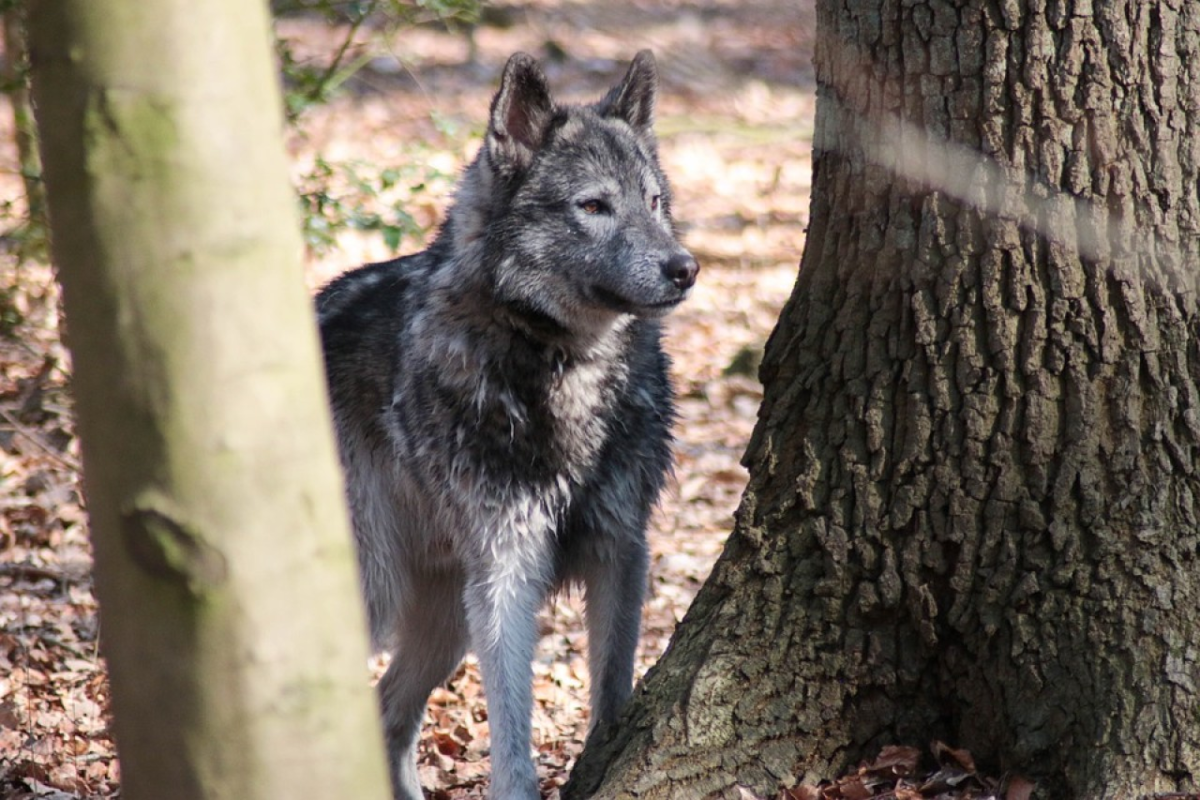
Authorities in the German state of Bavaria in the southeast have ordered that the puppies of a wolf that had mated with a domestic dog must be located and killed.
In the northwestern corner of Bavaria, in the region of Lower Franconia, authorities identified the wolf-dog hybrids. German law stipulates that these hybrid animals must be shot to protect the local wolf population .
In the 19th century, wolves in Germany were hunted to extinction; however, in 2000 they were reintroduced, and their numbers have been growing steadily ever since.
Animals known as wolf-dog hybrids consist of a mix of domestic dogs and wolves. This is possible because domesticated dogs are genetically related to wolves and can therefore interbreed.
Many people in the United States keep wolf-dog crosses as pets. According to an estimate by the Veterinary Genetics Laboratory at the University of California, Davis, there are more than 300’000 of these hybrid animals in the country.
These hybrids are, however, not a recognised breed and are banned in many US states and jurisdictions. Some animal welfare organisations such as the American Society for the Prevention of Cruelty to Animals consider them wild animals and oppose their breeding and ownership.
According to the W.O.L.F. Sanctuary, the mating of wolves and dogs in the wild does not normally occur. For a variety of reasons, including the desire to domesticate a wild animal and the illusion of breeding a superior “guard dog,” humans intentionally breed wolfdogs. Even the choice of a “wolf-like appearance” is a superficial example. It is widely believed that the mating of domestic dogs with wolves produces puppies that exhibit the perfect blend of domesticated and wild traits. However, attempts to “reinvent” the dog rarely result in the breed that the majority of people consider ideal.
According to the International Wolf Center, owners of hybrids frequently find that their pet is difficult to care for due to its behavior. Even within a single litter of hybrid puppies, genetic diversity leads to a wide range of appearances and behavioral patterns, making the behavior of hybrids unpredictable and more difficult to anticipate.
Following an examination of the remains of three dead sheep, Bavarian authorities in the Lower Franconian district of Rhön-Grabfeld have provided genetic evidence of a female wolf and her offspring.
As the Bavarian State Office for the Environment (LfU) reported, genetic analysis revealed that the wolf mother mated with a domestic dog earlier this spring, producing puppies that are wolfdogs.
The hybrids must be shot under the Federal Nature Conservation Act. According to a statement from an LfU spokesperson, the mating of wolves and dogs leads to genetic changes that can affect the gene pool of the wildlife in question.
Unlike domestic dogs, wolves are entirely capable of living in the wild. According to the authorities, the long-term survival and existence of wolves in the wild can only be guaranteed if the animal retains its environmental adaptations, which crossbreeding may jeopardize.
The LfU stated that it would take measures to remove the hybrid puppies. Although removal can be carried out either by capturing or shooting the animals, in the case of hybrids older than three months — as in the present case — the authorities will opt for “lethal removal,” or shooting.
The authorities pointed out that animals born in the wild, such as mixed-breed puppies, are likely unable to adapt to permanent captivity in an enclosure and would only suffer in captivity, reports Newsweek.
With your donation you help protect animals and give them a voice.
We are committed to an ethical understanding of wildlife and hunting modelled on THE CANTON OF GENEVA. Facts instead of hunters’ tales.
A satirical guide for aspiring hobby hunters. This text reveals what lies behind nature romanticism, hunting ethics and hunting myths — and why animal welfare advocacy remains critical.
Let’s stay in touch!
We would love to send you the latest news and offers in our newsletter. Monthly compact updates on hunting and wildlife!
The IG Wild beim Wild is a non-profit animal rights organisation. Its primary focus is the protection of wildlife from recreational hunting.
One does not become an opponent of hunting out of boredom, but out of knowledge of this animal cruelty. For professional wildlife protection.
