Content
'Fed skulls of animals killed prior to them': Fur and urine farms remain unregulated – WKRC
Sep
Now
70°
Mon
79°
Tue
88°
by David Winter, WKRC
MIDDLETOWN, Ohio (WKRC) – Following the raid of a fur and urine farm in northeastern Ohio, three wolf dogs ended up at a Middletown animal rescue. A state legislator said he was working on a bill that would close loopholes which allowed the horrific conditions at the fur farm to exist.
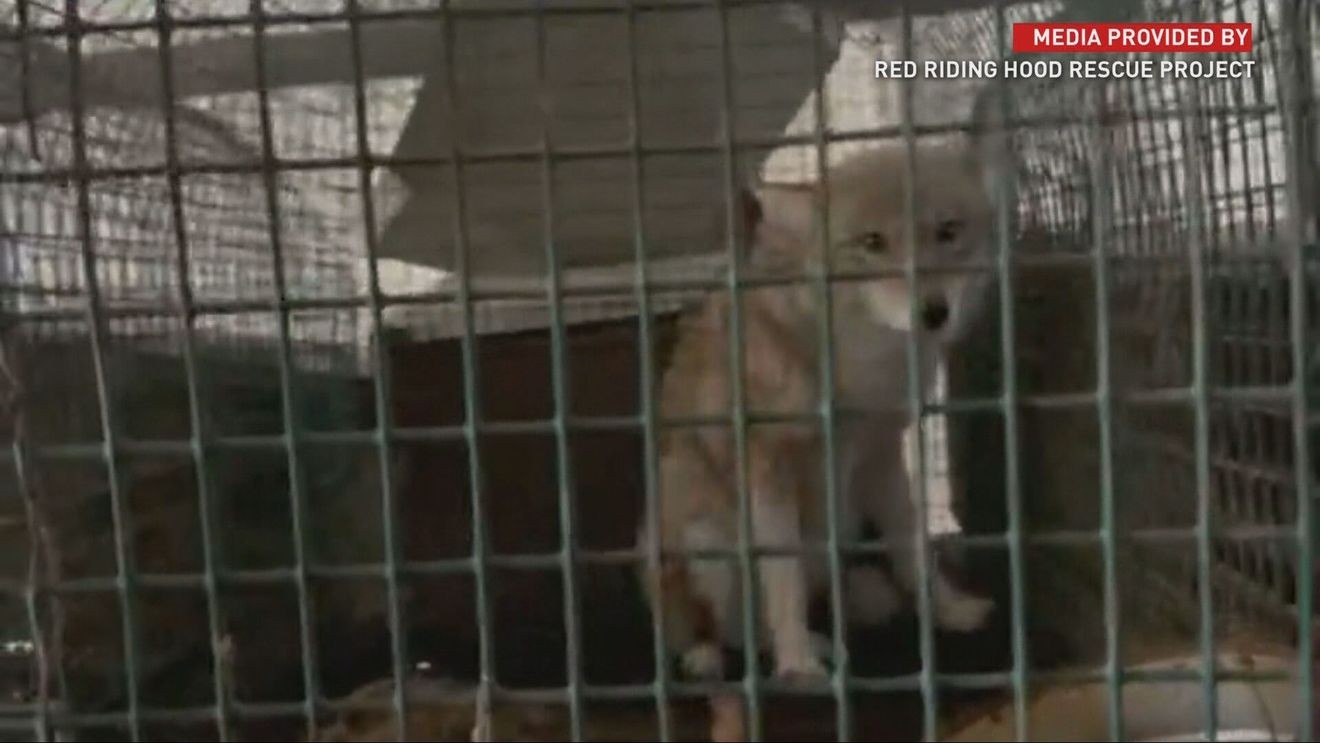
“They're 60% gray wolf, they're 40% dog. So, wolf dogs are dogs by law," said Susan Vogt, president of the Red Riding Hood Rescue Project. She gave a tour of her wolf dog sanctuary to Ohio State Rep Rodney Creech on Wednesday. She showed him the animals she rescued in January from an Ashtabula fur and urine farm. The conditions were horrific – more than 400 skunks, wild boar, coyotes, foxes and wolf dogs were kept in wire-bottom cages with no protection from the bitter cold.
“They had frozen ice [for water],” said Vogt. “They had no food. They were being fed skulls of animals that were killed prior to them.”
Many of the animals were already dead. One hundred needed to be euthanized.
“There are no regulations anywhere in the country for animals on a fur or urine farm,” she explained. Urine from foxes, coyote and wolves, is used in animal repellent to protect vegetable gardens and commercial crops from rabbits and deer.
There are alternatives to using predator urine in animal repellents, such as “Liquid Fence Deer and Rabbit Repellent," sold at Home Depot. It uses egg solids, garlic, sodium and thyme, among other ingredients – not urine.
But the urine and fur trade remains robust, and the lack of regulation and oversight prompted State Representative David Thomas to make plans to introduce a bill to save animals from deplorable conditions.
“We spoke in February and you said that you were looking to introduce legislation this session,” Local 12 asked in an interview with Thomas. “Why hasn't it been introduced yet?”
He replied, “If you introduce something that is incorrect in this space, my understanding, and you kind of start off on the wrong foot, that can essentially poison the whole effort."
Local 12 posed, “It seems pretty simple. Animals should be treated humanely, whether you're at a zoo, a shelter, or a fur farm.”
“I agree it should be very simple,” he answered. “That's what I believed to be the case when I first kind of started on this journey for reform. However, it has gotten very gray very quickly.”
Representative Thomas said one issue slowing down the process is determining who has oversight of fur and urine farms. Depending upon the type of animal, it could be local, state, or federal authorities.
So for now, fur and urine farms across the country will remain unregulated, leaving organizations like the Red Riding Hood Rescue to pick up the pieces.
“They're doing fantastic,” Vogt said of the three wolf dogs she saved from Ashtabula. “They are learning how to use their muscles."
Representative Thomas said he still plans to introduce legislation in the fall. Local 12 will check back with him then.
2026 Sinclair, Inc.
