
Content
Almost Every Dog on Earth Still Has a Bit of Wolf Inside — Even Chihuahuas – ZME Science
Aug
Home → Environment → Animals
Most dogs today have traces of wolf DNA that shaped their size, senses, and behavior.
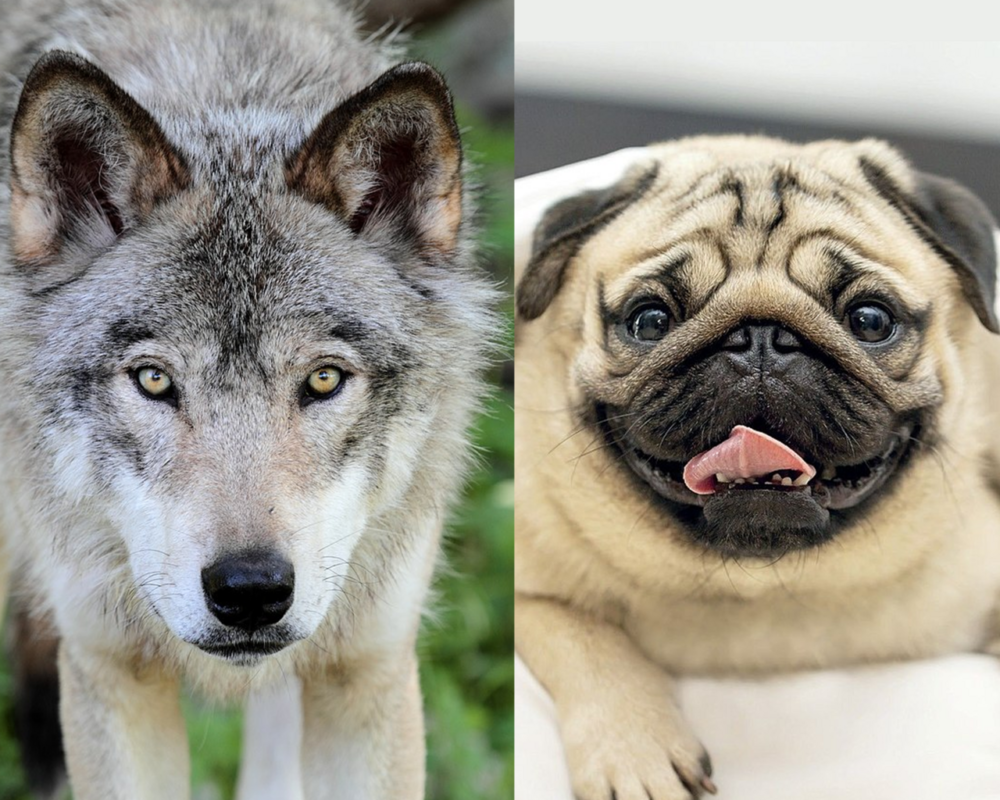
When scientists compared the DNA of thousands of dogs and wolves, they found the two species were not as separate as once thought. Nearly every dog, from Chihuahuas to huskies, carries traces of wolf DNA. “Modern dogs, especially pet dogs, can seem so removed from wolves, which are often demonized,” said Audrey Lin, a postdoctoral researcher at the American Museum of Natural History.
Lin and her colleagues at the Smithsonian’s National Museum of Natural History and the University of California, Davis, have revealed a surprising level of genetic overlap between dogs and wolves—long after dogs were first domesticated roughly 23,000 years ago.
Their new study, published in PNAS, examined 2,693 genomes from modern and ancient dogs and wolves. It shows that 64% of dog breeds have detectable traces of wolf ancestry, remnants of ancient hybridization that took place roughly a thousand generations ago.
Scientists assumed that once dogs split from wolves, their evolutionary paths diverged cleanly. “Prior to this study, the leading science seemed to suggest that in order for a dog to be a dog, there can’t be very much wolf DNA present, if any,” Lin said. “But we found if you look very closely in modern dog genomes, wolf is there.”
To uncover those traces, Lin’s team used advanced computational tools originally designed for human population genetics. They found that post-domestication interbreeding was not a one-off event but occurred across thousands of years, as dogs accompanied humans into new territories and occasionally mated with local wolves.
Larger working dogs, such as sled dogs and livestock guardians, tended to have more wolf ancestry. Some modern wolfdog breeds—like the Czechoslovakian and Saarloos wolfdogs—contain as much as 40% wolf DNA, reflecting intentional hybridization during the 20th century. But the finding that even tiny Chihuahuas retain about 0.2% of wolf ancestry suggests that no breed is entirely free of its wild roots.
“This completely makes sense to anyone who owns a Chihuahua,” Lin joked. “And what we’ve found is that this is the norm—most dogs are a little bit wolfy.”
In most species—pigs, sheep, or even crops like maize—domesticated and wild populations frequently interbreed where they overlap. Dogs and wolves seemed to defy that rule. But the new results suggest that the canids’ shared evolutionary story is more tangled.
Stay ahead with ZME Science and subscribe.
Please check your inbox and confirm your subscription.
According to the study, wolf DNA fragments in dogs are typically very short, evidence of ancient hybridization events that occurred thousands of years ago. By contrast, dog DNA found in wolves appears in longer blocks, hinting at more recent interbreeding—perhaps within the past two centuries, as human expansion fractured wolf populations and increased contact with free-ranging dogs. The researchers suspect that hunting and habitat loss sometimes forced lone female wolves to leave their packs and mate with stray dogs.
“This is a study about dogs,” Lin said, “but in a lot of ways, it’s telling us about wolves.”
The genomic map of wolf ancestry in dogs also reveals how this ancient genetic entanglement helped shape traits that humans value today—and some that persist beyond our influence.
As previously stated, wolf ancestry is highest in large, physically capable dogs and in those bred for demanding tasks. Arctic sled dogs, pariah breeds, and hunting hounds carry particularly high levels. Terriers and gundogs, by contrast, have among the lowest.
The team compared kennel club descriptions of breed personalities with wolf ancestry levels. Breeds with little wolf DNA were often described as “friendly,” “easy to train,” and “affectionate.” Breeds with more wolf ancestry tend to be more “independent,” “suspicious of strangers,” “alert,” and “territorial.”
Co-author Logan Kistler cautioned that these labels are cultural constructs rather than scientific metrics, but they hint at intriguing links between ancient hybridization and modern behavior.
In some cases, wolf genes appear to have provided dogs with adaptive advantages. One example comes from the Tibetan Plateau, where the high-altitude Tibetan mastiff carries a gene variant called EPAS1—just like Tibetan wolves—that allows them to tolerate low oxygen conditions.
In another instance, village dogs across Eurasia and Africa show wolf ancestry concentrated in regions of the genome linked to olfactory receptor genes. Those inherited wolf genes may have sharpened their sense of smell—a useful trait for scavengers surviving on human waste in harsh conditions.
“Dogs are our buddies,” Kistler said, “but apparently wolves have been a big part of shaping them into the companions we know and love today.”
Human migration has closely shaped the history of dogs. As people traveled across continents, their dogs came with them—already domesticated, but still capable of mixing with wild wolves. When the two species crossed paths, they sometimes interbred, leaving behind small fragments of wolf DNA that gradually spread through dog populations worldwide.
Their genes inextricably bind the two canid species together. Even as humans bred dogs into everything from mastiffs to dachshunds, bits of the wolf persisted. “This suggests that dog genomes can ‘tolerate’ wolf DNA up to an unknown level and still remain the dogs we know and love.”
Aerospace engineer with a passion for biology, paleontology, and physics.
© 2007-2025 ZME Science – Not exactly rocket science. All Rights Reserved.
© 2007-2025 ZME Science – Not exactly rocket science. All Rights Reserved.
