
Content
Tassie tiger pelt bought for $5 at garage sale – Australian Geographic
Aug
A celebration of how alien yet relatable so many of the creatures that live among us can be.
All the essential information you need about Australia’s unique flora and fauna.
The weird and wonderful natural phenomena of our natural world – explained.
Glimpse worlds beyond our own with AG’s esteemed space expert and living legend, Fred Watson.
Be surprised and illuminated by Dr Karl, our long-time commentator on all things new in science.
The weird and wonderful natural phenomena of our natural world – explained.
All the essential information you need about Australia’s unique flora and fauna.
Delve into the nation’s strangest people, places and phenomena with our master of mysteries, Tim the Yowie Man.
Significant historical events that have shaped Australia.
Bruce Elder shares with us his extensive knowledge, insights, and hot tips for every Australian town.
Take a sustainable walk on the wild side with our seasoned wildlife-encounter columnist, Roger Smith.
Home Blogs AG Blog
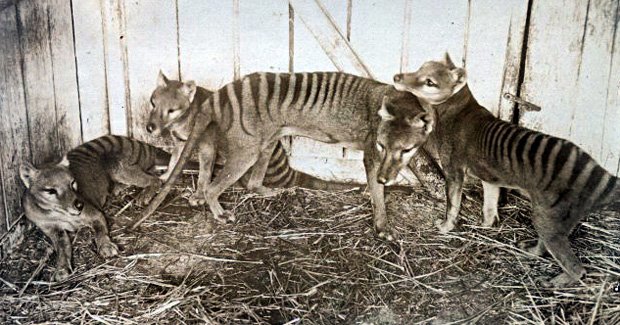
THIS IS A LUCKY BREAK if ever I saw one. A US newspaper reports that a local man picked up what appears to be a Tasmanian tiger pelt at a garage sale in San Diego for just $5. He’s already in negotiations with an Australian auction house, which says it last shifted a single thylacine pelt for $68,000, and a rug made of eight pelts for a whopping $260,000.
“I didn’t know what it was,” Bill Warren told the San Diego Union Tribune this week, adding that “It pays to go to garage sales sometimes.” He bought the skin in June from a woman who said she found it at a garage sale herself in Boston, 30 years earlier.
At first glance, the pelt certainly has the distinctive striped markings of a Tasmanian tiger – see an image of Bill holding it here – but I guess the look would be easy to fabricate if you knew what you were doing.
After reviewing some images, Professor John Long – formerly of Museum Victoria in Melbourne and now at the Natural History Museum of Los Angeles County – told Bill that he agrees it looks like a Tassie tiger, but pricey genetic tests will be necessary to confirm it.
If it really is a thylacine, the best place for it is in the collections of an Australian museum, where it can be used to increase our knowledge about a beautiful and enigmatic creature that is now forever lost to us (the thylacine genome project is one example of research that could benefit from it).
The last known Tasmanian tiger, the largest marsupial carnivore of recent times, died in Hobart Zoo in 1936 after a prolonged campaign to exterminate it by European settlers of Tasmania. A much-loved Tassie icon today, it can be found adorning everything from state emblems to beer bottles.
Read the original story here, at the San Diego Union Tribune.
RELATED STORIES
On this day: Death of the last Tasmanian tiger
More funding needed for thylacine genome
Historical footage of the last Tasmanian Tiger known to be alive. It died in 1936 and none have been seen since.
Eating insects is growing in popularity. Are they just a trendy addition to city restaurants, or might they be the solution to feeding the planet’s burgeoning population?
Colin Putt’s legendary fix-it abilities brought the highest caliber of adventure to Australian Geographic’s first pages, featuring in issue #1.
Secret Creek is where animals go to thrive. And it’s where Allison Garoza got to see a host of our precious native species
We’re relocating our magazine archive – and we’d rather send it to you than haul it to the new warehouse.
From cuddly companions to realistic native Australian wildlife, the range also includes puppets that move and feel like real animals.
Get incredible stories of extraordinary wildlife, enlightening discoveries and stunning destinations, delivered to your inbox.
By subscribing you become an AG Society member, helping us to raise funds for conservation and adventure projects.
