
Content
Is taxidermy a slowly dying art? – Duluth News Tribune
Aug
Sponsored By
ADVERTISEMENT
ADVERTISEMENT
DULUTH — Randy Bowe remembers exactly how he got interested in taxidermy more than a half-century ago.
“I was 12 years old, and I had saved up all my money and went to Montgomery Wards and bought an Ithaca Model 37 Featherlight (12-gauge shotgun) and a box of shells, and a case for the gun, for $108,” said Bowe, now 64. “The first thing I shot was a nice drake wood duck and my dad took it to get mounted for me. And when it came back I thought, wow, how did they do that? I wanted to know more.”
ADVERTISEMENT
Bowe found out a lot more over the next 52 years or so. He opened his taxidermy shop on East Superior Street in Duluth in 1980 and has been going strong ever since.
But for how much longer?
“I’m going to be 65 this year. I’m slowing down. I’m not sure how much longer I can keep this up at this pace,” Bowe said.
In just the past few years, Duluth has lost two longtime taxidermy businesses: Hipp Taxidermy, with Gary Hipp retiring, and Storey Taxidermy, with Jim Hagstrom retiring. Matt Yernatich, founder and owner of Artistic Anglers taxidermy just outside Duluth, died in 2021, although that business has since been revived by new owner Rob Bergquist.
“I would have loved to sell my business, but there wasn’t anyone out there looking to get into it,” said Hipp, who operated his business for 40 years, the last 25 on Rice Lake Road just north of town. “The guys who were in it are getting older now, like me. I retired at 65. That’s long enough.”
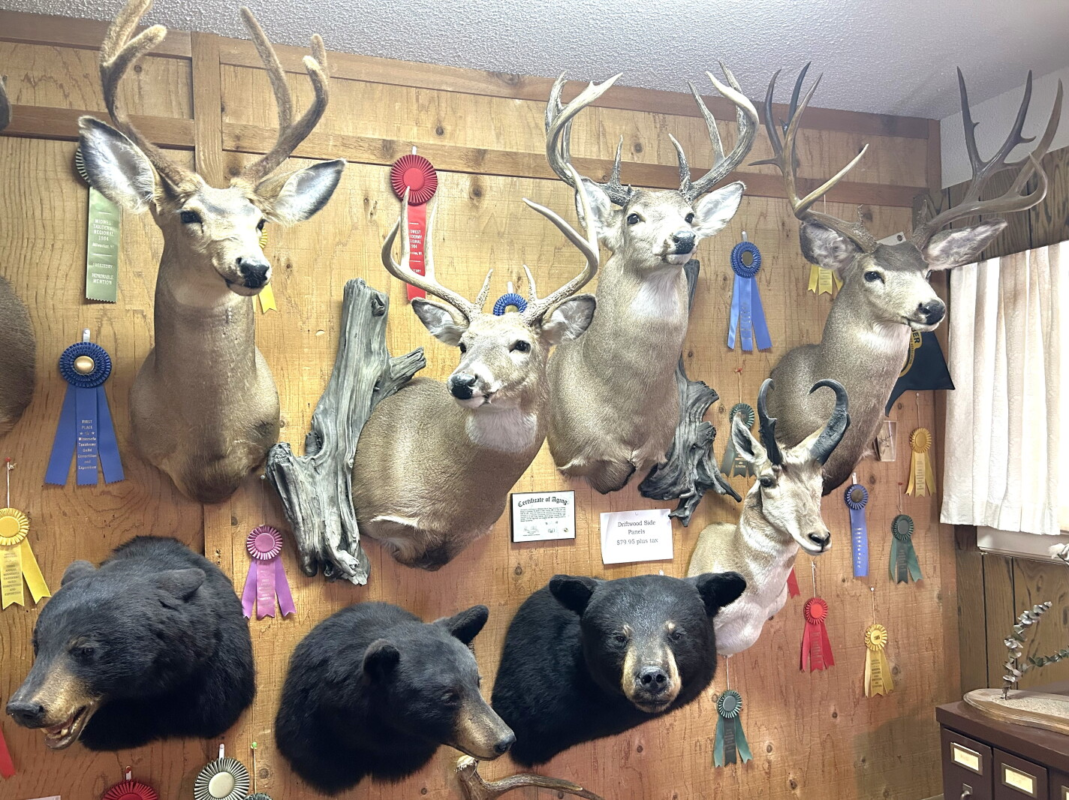
Bowe said demand is still there, especially around Duluth, with fewer local options for people looking to preserve their trophy fish, bird, bear or deer. But he said the job may be more work than many people are willing to do, especially as a full-time gig.
“I think it is kind of a dying art. I’m becoming sort of a dying breed. There aren’t many guys doing it full-time anymore, or at least not many young people coming in,” Bowe said. “Part of it is that it’s pretty physical work. That’s why I’m starting to slow down now after back and knee issues and cancer. … It’s not just sitting at a computer or flipping switches.”
ADVERTISEMENT
Bowe, who studied at two private taxidermy academies, said taxidermy used to be taught at some community colleges and technical colleges in Minnesota, but not anymore. A few private taxidermy schools still operate in the state.
Bowe said he used to watch when the new phone book came out each year as new names would pop up under “taxidermists” in the Yellow Pages.
“But, every year, just as many would be gone as there were new ones. People got into it and then realized it was more work than it was money and got out after a year or two,” he said.
But, for Bowe, it’s been a rewarding career. He established himself early as a quality producer, and he gets not only repeat customers but many new customers through word-of-mouth advertising.
In fact, it’s almost too much business, and now Bowe is backed up more than two years on some projects.
“I’m still working on some customers’ mounts from 2021,” he said. “That’s terrible. But that’s what’s happened now.”
The problem started during the pandemic when tanneries shut down, creating a backlog of business. Then there was a shortage of supplies, Bowe said, then an ongoing delay in getting supplies, and then repeated price hikes that doubled the cost of some of his essential materials.
ADVERTISEMENT
“The costs are going up every year for us, and if I don’t pass some of that on, I can’t make a living doing this,” Bowe said.
The price of a traditional, shoulder-mounted deer, from the neck up, is approaching or over $1,000 at most taxidermists these days.
“That’s definitely a deterrent for some people when they hear that. There are some people who have the money and are going to do it no matter what. But for a lot of folks, that’s a big discretionary item,” Bowe said.
Bowe said he probably does more fish than anything else, and more walleyes than any other fish. An avid whitetail hunter who owns 380 acres of deer woods up the North Shore, Bowe says his favorite mount is still a whitetail buck, even though he’s done thousands over the decades.
Bowe said it helped him catch up on work after the very slow 2023 Minnesota deer hunting season that “was by far the worst ever in my 40 years in business.” Normally, Bowe would take in 60-100 deer mounts per season.
“I got 15 this year — that’s it,” he said.
Lexie Neff grew up around farm animals near Milaca, Minnesota (she judged livestock competitions for 4-H and FFA) and has been a deer hunter since she was old enough to get a license.
ADVERTISEMENT
Now 30, Neff lives with her husband in Holyoke, south of Duluth, and, when she’s not busy as a safety officer for a Duluth agency, she’s practicing her taxidermy skills.
As with Bowe’s wood duck, Neff said it was one of her own trophies that inspired her to try taxidermy.
“I shot a nice buck when I was 19 that my father-in-law said he would mount for me. … But, after a few years of waiting for him to get to it, I decided to do it myself,” Neff said.
Neff found some taxidermy DVDs and YouTube videos and got help from a few mentor taxidermists.
“I had been around animals all my life, so it (taxidermy and dealing with dead animals) wasn’t that different for me,” she said.
She admits she had a lot to learn when she started, but Neff kept at it, mounting both her own and her husband’s trophies as she gained skill and confidence.
“He calls himself my specimen collection expert,” Neff said of her husband’s frequent hunting excursions. The couple has been on African safaris and made trips to western states as well as hunting in Minnesota.
ADVERTISEMENT
“I still have a zebra in my freezer from our 2018 trip that I need to get to,” Neff said.
Neff said she started getting serious about taxidermy in 2018 and started doing it professionally in 2020, just as the pandemic problems hit.
“It was really hard to get anything you needed, or the wait was really long. … And the prices went up fast,” she said. “It set everything back. And (customers) had to start waiting a lot longer to get their animals back.”
Neff said she usually works to get pieces back to the customer within a year, “but I’m struggling to make that right now.”
Neff said there is now some sticker shock over a $1,000 price tag for a mounted deer head, more than double the average price of a decade ago.
“It’s not going to be every 10-point buck that gets mounted anymore,” she said. “People are going to wait for something really special, or maybe if it’s a first deer for someone. But I think some people are deciding to skip it when they see the price.”
In some cases, hunters may choose to just have the antlers mounted, or to do a European-style skull mount, which are generally less expensive than shoulder mounts.
ADVERTISEMENT
The supply chain situation is better now, and Neff says she is all in with taxidermy, with customers bringing in deer, bears and birds from up to 100 miles away. She’s even doing a hawk and an owl for Friends of the Sax-Zim Bog, with a federal permit because they are protected birds — preserved for educational display at the group’s Welcome Center facility near Meadowlands.
“I’ve tried a few fish. … but I think I’ll stick to mammals and birds,” she said. “I’ve got a couple of my own (wild) turkeys I’m going to do and see how that goes.”
Neff, who graduated from the University of Minnesota Duluth with degrees in biochemistry and cell and molecular biology, said taxidermy “scratches my artistic itch.”
“It really is an art form, with the goal of trying to get the animal to look as lifelike as possible,” she said.
“It’s difficult to learn by yourself,” Neff added, which is one reason she joined the Minnesota Taxidermists Guild, a statewide group of about 150 members who not only compete against each other but also help each other advance the trade. She now serves as newsletter editor and a board member of the guild, which will hold its annual competition in Alexandria in April.
“It’s a great group. We can be very competitive, but it’s also very friendly. We’re all trying to get better, to make (taxidermy) better,” she said. “It’s not so much that you want to win, of course you do, but it’s the feedback you get from all the other really good taxidermists there. I’ve learned a lot from them.”
She also has gone to study with veteran taxidermists.
Neff said most of the new, younger members in the Minnesota Taxidermists Guild are part-timers like her, unable or unwilling to take the leap of faith, quit their day jobs, and do taxidermy full time.
“I don’t think that will happen for me until after I retire, or maybe it’s a way to retire early,” she said. “I’m not sure there’s enough money in it to do it as a full-time job.”
But Neff disagrees that taxidermy is somehow fading into the sunset.
“It’s not a dying art. … The quality of work being done now is mind-boggling it’s so good,” Neff said. “There may be fewer of us. But there are enough people still doing great work to keep it alive.”
For more information on the Minnesota Taxidermy Guild, including the group’s competitions that are usually open to the public, go to mntaxidermy.herokuahpp.com or look them up on Facebook .
To reach Neff Taxidermy, email Lexie@nefftaxidermy.com .
To reach Randy Bowe Taxidermy, email randy@bowetaxidermy.com .
ADVERTISEMENT
ADVERTISEMENT
ADVERTISEMENT
