
Content
The Alaska rewind: How history fuels Putin’s latest imperial dreams – The New Voice of Ukraine
Jul
It’s been 158 years since Russia sold Alaska to the United States. So how did it happen — and how did this harsh, frozen territory become one of the wealthiest states in the country? More to the point: Why does Vladimir Putin still seem obsessed with the idea of taking it back?
Putin wants to reclaim Alaska as part of Russia — or at least that’s the implication. The idea of “returning” the northern lands resurfaced in Russia in Jan. 2024, when Putin issued Decree No. 21. The order called for identifying foreign properties that once belonged to the Russian Empire or the Soviet Union and verifying whether rights to them were still formally recognized.
While the dictator’s directive didn’t name specific territories, international observers quickly speculated that Putin had Alaska in his sights. In the U.S., the idea was widely mocked — but six months later, Washington quietly bolstered its naval presence near Alaska, a response to growing Kremlin activity in the region.
So why would Putin target these cold, unforgiving lands? And why would the United States be willing to go to war over them?
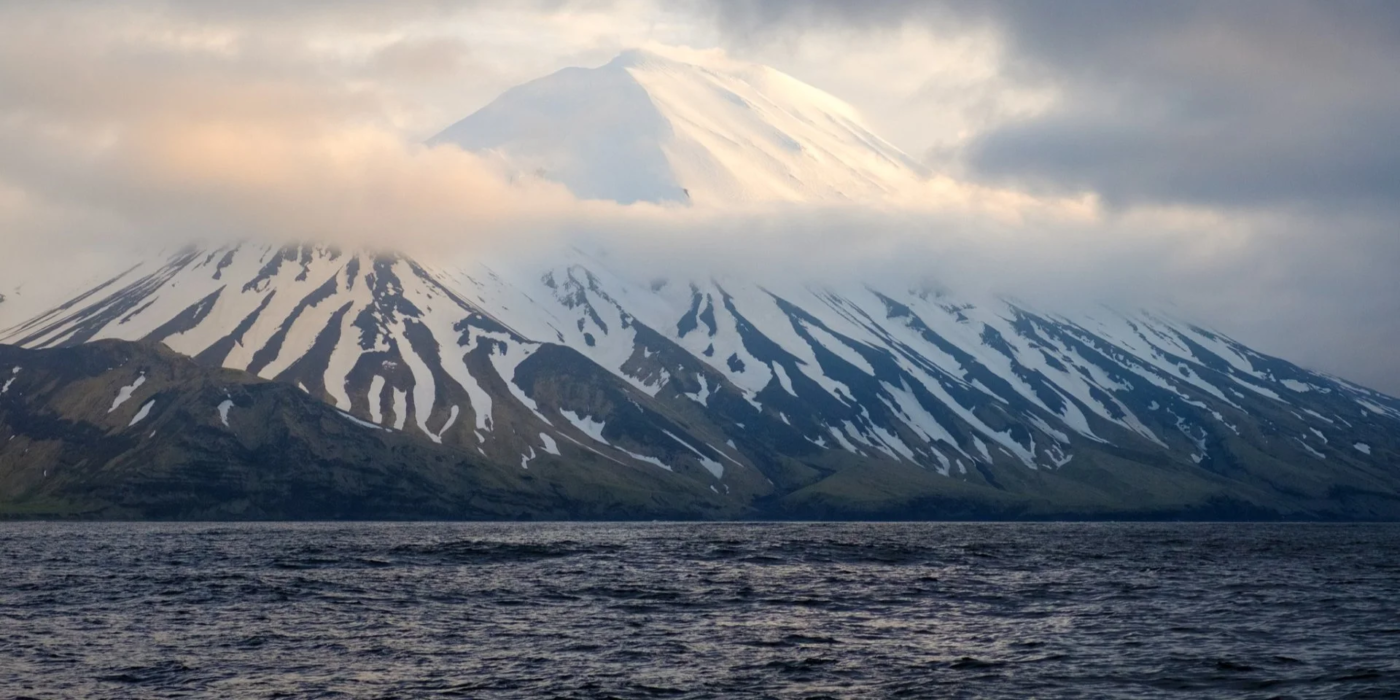
Covered in snow and rich in gold and oil, Alaska is the largest and northernmost state in the U.S. But it hasn’t been American all that long — the purchase happened only in the mid-19th century, and for a bargain price considering the region’s vast mineral wealth and thriving fisheries. So how much did the U.S. pay the Russian Empire for Alaska? And why did Tsar Alexander II sell it?
Russian sailors first reached Alaska in the early 18th century. These lands quickly became a cash cow for Russian merchants, who bought valuable furs from Indigenous peoples for next to nothing, then resold them at a profit. Settlements soon followed, and the territory was officially claimed by the Russian Empire. Still, the remote, icy peninsula held little interest for Russia’s ruling elite, including Tsar Alexander II.
That changed in the 19th century when gold was discovered in Alaska.
In 1856, Russia suffered a painful defeat in the Crimean War. Its army was drained, and the empire’s treasury nearly empty. Gold from Alaska might have helped replenish it — but instead, advisers persuaded Alexander II to sell the land to the United States. Their argument: The region’s riches could lure in Britain, then a global superpower, and trigger a violent conflict. A peaceful sale, on the other hand, could bring in much-needed cash.
The argument stuck. Hoping to avoid war, Alexander II agreed to negotiate. The U.S. initially offered $5 million, but Russia’s crafty envoy, Baron Eduard de Stoeckl, managed to wring $7.2 million from the Americans. Despite pushback from many senators, the U.S. approved the deal — though it passed by just one vote in the final Senate tally.
On March 30, 1867, the United States and the Russian Empire signed the treaty to purchase Alaska. In a single moment, Russia lost more than 1.5 million square kilometers of its territory. The official handover ceremony took place on Oct. 18 that same year.
In 1896, gold was discovered in the upper Yukon River. Prospectors began streaming into Alaska. A year later, when news of the gold strike reached San Francisco and Seattle, the U.S. plunged into a full-blown “gold rush.” Around 100,000 people rushed to the Klondike hoping to strike it rich. But the brutal climate and grueling journey turned into a nightmare for most. Many returned home empty-handed — including writer Jack London. He didn’t find gold, but the harsh experience became the foundation for his “Northern Stories,” which later gained global literary acclaim.
In those stories, London explored the devastation of nature in the pursuit of wealth and the raw struggle of people left to face the wilderness alone. The gold rush lasted several years before fresh deposits were discovered in Alaska and northeastern Canada.
The peninsula officially became the 49th U.S. state in 1959. But after the fall of the Russian Empire and the rise of the Soviet Union, Moscow began floating the idea of taking Alaska back. That’s when rumors started spreading — that Russia hadn’t sold Alaska at all, but merely leased it to the U.S. for 100 years. In 1967, much of the Soviet Union held its breath, expecting the territory to be returned. It never was. Could it still happen?
Alaska remains the largest U.S. state, and its residents are among the country’s wealthiest. The average annual household income can reach $80,000 — well above the national average of roughly $57,000.
Today, oil and gold extraction are thriving industries across the peninsula. Nearly 60% of all U.S. fish and seafood is caught in Alaskan waters. These harsh but stunningly scenic lands also draw tens of millions of tourists every year.
But Alaska’s true value for the U.S. lies in its military importance. The state’s 1.5 million square kilometers — much of it undeveloped — give the U.S. room to test and potentially deploy nuclear weapons. That’s what makes Putin nervous.
Russia’s imperial revivalist dreams are driving his obsession with reclaiming Alaska. He’s not hiding it. One clear sign: Dmitry Medvedev’s English-language post on X, suggesting war between Russia and the U.S. over Alaska is “inevitable.”
Russian State Duma deputies have also floated the idea of a hypothetical tactical nuclear strike on the peninsula. If Putin manages to take Ukraine, there’s no telling what might come next — the Baltic states, Poland, or maybe even Alaska. The U.S. would do well to remember that.
The military war may be swinging in our favor, but the information war continues.
Just as an army needs soldiers, so does a free society need its journalists to ensure that people have access to honest, trustworthy voices to understand the world around them.
For the past five years, The New Voice of Ukraine has been working tirelessly to push back against Russian narratives and defend democracy. But we cannot do it alone.
Please consider supporting us on Patreon for just $5 a month – your donation does directly to supporting journalists and ensuring that this front of the infowar says solid and defended.
Thank you.
Follow us on Twitter, Facebook and Google News
If you find an error in the text, select it with the mouse and click
Теги: Russia Russia U.S. negotiations Russia war economy Russian war escalation United States Alaska oil Vladimir Putin U.S. history Alaska LNG
NV Премиум это:
or
Продолжить читать материалы открытого доступа
назад ко входу
Мы отправили вам письмо с ссылкой на создание нового пароля
Если письмо не пришло в течение нескольких минут, пожалуйста, проверьте папку Спам.
В случае возникновения проблем, пожалуйста, напишите в службу поддержки support@nv.ua
About using cookies
By continuing to browse NV.ua, you confirm that you have read the Terms of Use of the site and agree to the use of cookies.
